It seems that my commitment to provide yearly updates on the project has fallen behind schedule by a year once again. Nonetheless, I am pleased to report that the work continues, albeit at a slower pace than I might have wanted. Here, I will summarize some recent work in the hope that I will be able to complete and incorporate it into the main website in the future.
“Old Quarantine Station, mouth of the Schuykill [i.e., Schuylkill]”, an 1857 watercolor by James Fuller McQueen. This is the only image I have found to-date that pictures how the Old Lazaretto might have looked upon the Phoebe’s arrival. Although no longer a quarantine station in 1857, the property stood well into the late 19th century and was used for other purposes, including as a barracks in the War off 1812. The original is held by the Library of Congress in the Marian S. Carson Collection.
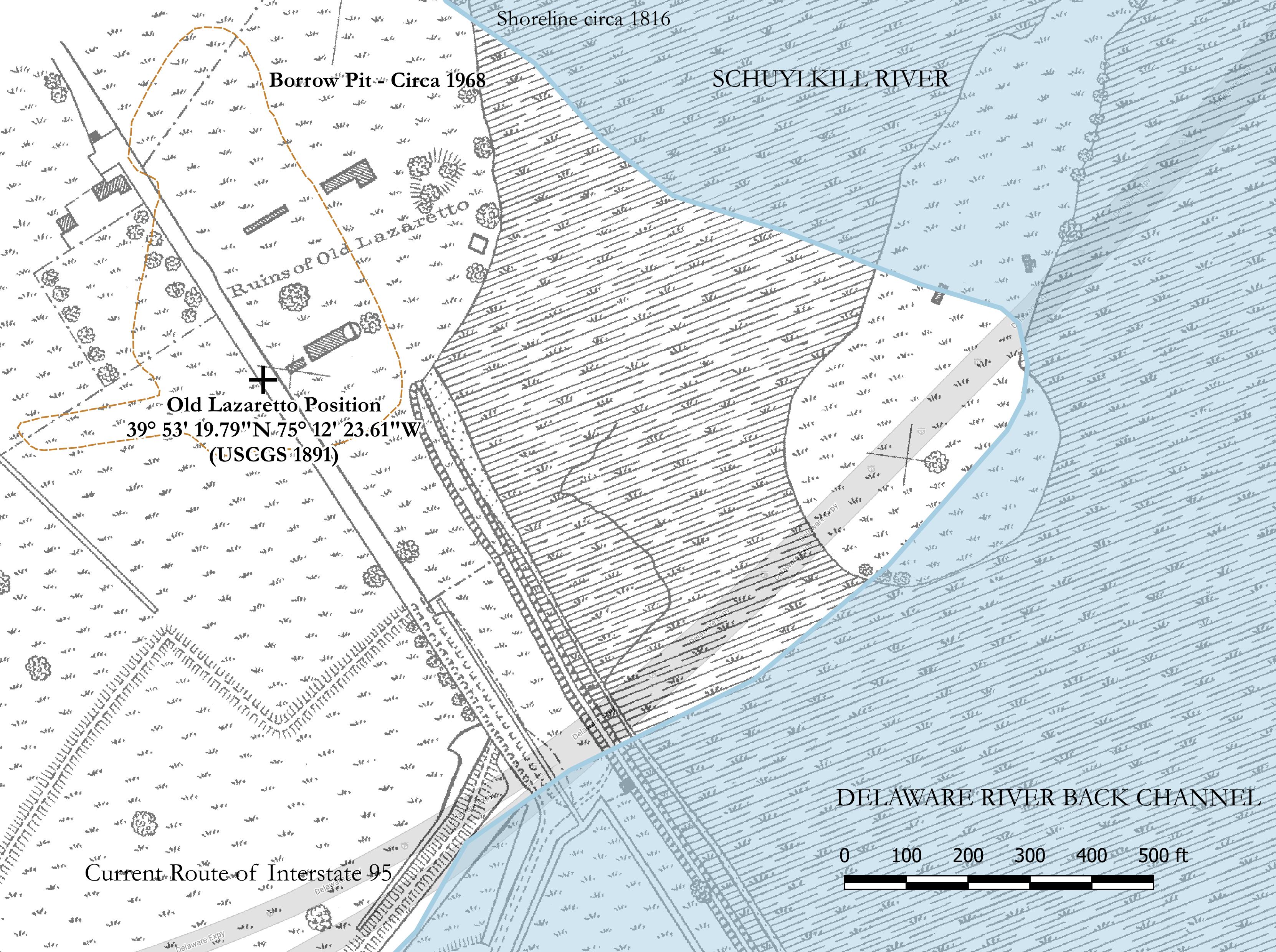
To begin, I’d like to point out that this coming Monday, August 4, 2025 marks the 225th anniversary of the arrival of the slaving schooner Phoebe at the Fort Mifflin quarantine station, Philadelphia (above), with the Prudent arriving two days later. These arrivals mark the beginning of the Ganges story in Philadelphia, a story that continues to this day through the Ganges descendants living in the area.
The Origins of the Amended Slave Trade Law (1800)
While the focus of my research over the years has been the Ganges Africans themselves, I have tried not to neglect the circumstances that brought them to Philadelphia in the first place. One key element was the amended law (May 1800), “An Act in addition to the act intituled [sic] ‘An act to prohibit the carrying of the Slave Trade from the United States to any foreign place or country'” which provided the statutory authority to Captain Mullowney and the USS Ganges to interdict the voyages of the Prudent and Phoebe (See The Law for more detail). What I hadn’t realized until recently, was that the law’s amendation was the direct result of political action by the free black community of Philadelphia.
In December 1799, Reverend Absalom Jones and 70 other “People of Colour, Freemen within the City and Suburbs of Philadelphia”, including Reverend Richard Allen, petitioned the United States Government for three things [1]:
To address deficiencies in the existing slave trade law (1794)
To address deficiencies in the Fugitive Slave Law (1793)
To “exert every means in your power to undo the heavy burdens, and prepare way for the oppressed to go free, that every yoke may, be broken.”
Congressman Robert Waln of Pennsylvania, introduced the petition to the House on January 2, 1800 to acrimonious debate, with southern supporters arguing that the entire petition should be thrown out. All but one of the representatives agreed that consideration of the third request was in violation of the Constitution [2], but the remaining two were referred to committee for consideration. While dropping any proposed changes to the Fugitive Slave act, the committee did return the slave trade amendment as described here, which — followed by “a long and warm debate” — passed on May 3 by a vote of 67-5. [3]
John Rutledge Jr of South Carolina, who cast one of the five negative votes, had argued that if slaving vessels were captured, northern states — where the former captives would likely be taken — were incapable of accepting the recently enslaved into their communities:
What will become of them when landed? Who will feed them because they are hungry? Who will cloath them because they are naked, and who will take them in because they are strangers? [4]
Indeed, this entire website provides many of the answers to these questions, but how was it done?
The Network
(Click to enlarge) The network diagram was created using Gephi, then rendered for the web using Retina.
We know that the PAS organized the effort to indenture the Ganges Africans, but this begs the question of how they were able to pull it off. As I pointed out in the Indentures Section, the committee of guardians typically sponsored “only” a few indentures per month and the fact that their special committee managed to place more than 100 of the Ganges Africans over a period of 2 months indicates that a large scale, concerted effort was needed. It’s easy enough to hypothesize that Society members called on friends, family and neighbors, but was this really the case?
I’ve spend a considerable amount of time over the last year investigating this question and, although the work remains incomplete, I can still provide a qualified answer as “yes”. For example, Samuel Bettle, the chair of the PAS’s special committee, had strong family ties to the Brandywine Valley through his fiancé and future wife, Jane Temple, whose brothers, Caleb and Edward Temple, indentured John and Samuel Ganges. By using published family trees, it’s possible to identify many family links among the Ganges masters, especially through their spouses, indicating indirectly, the presence and influence of women in the network. The masters shared other connections, often via common church membership, particularly, but not exclusively, Quaker, as well associations through the Philadelphia Health Office, the US Navy and, of course, the Abolition Society.
This visualization of the network, though incomplete and in rough form, still clearly pictures the central role played by the Abolition Society and helps us identify individuals who played significant and multiple roles in the network: Philip Price Jr, Samuel Painter Jr., Edward Garrigues, Isaac Kirk, Jesse Trump and Priscilla Michener. I plan to flesh out the network in the coming months to provide a more complete picture as well as describing the methods I used to identify these links in a paper submitted (but not yet accepted) to the Pennsylvania Magazine of History and Biography.
Precedents
Finally, I’ve been trying to get a better sense of the context in which the Ganges incident took place by asking the following questions:
Q: Was the Ganges incident the first of its kind where enslaved Africans were freed under the US law banning US vessels from carrying slaves to foreign ports?
A: No
A number of vessels were condemned and sold under the original, 1794 anti-slave trade law, but only after they had discharged their human cargo overseas and returned to their home ports in the United States — with one exception. On December 3, 1796, the Brig Lady Waltersdorf arrived in Philadelphia, 30 days from St. Croix. She had cleared New York earlier in the year as an American vessel, but had conducted a slaving voyage to Africa and the West Indies by sailing under Danish colors. Most of her human cargo was discharged in the Caribbean, but the captain, Thomas “Beau” Walker, was reckless enough to bring two of his personal slaves with him. Soon thereafter, he was brought to the court of (who else) Judge Richard Peters. The Lady Waltersdorf was condemned and sold and Walker’s enslaved Africans, a man nick-named Bacchus and an unnamed woman, were liberated. Thus, Bacchus and the unknown woman hold the distinction of being the first enslaved Africans to be freed under the 1794 law.
Newport Mercury, 21 March 1797.
In a second reckless act — especially since he was still in Philadelphia — Walker fitted out a second vessel for the slave trade, the brig Lindeman. There was enough hidden evidence discovered on board that Walker was taken to Richard Peter’s court again. The Lindeman condemned and sold as well.
There is more of this story to tell, but that must wait for the next update. [3]
Q: Was the Ganges incident the first time where American slaving vessels were captured at sea by the USN under the amended law of May 1800?
A: No
This distinction belongs to the USS Experiment, Captain William Malley, which captured the Sloop Betsy off Cuba in June 1800. Unfortunately, the slaves aboard were not freed, but taken to Havana instead. You can read the details here, where I have documented the event in some detail.
Notes
[1] The National Park Service provides a full copy and transcription of the petition here. Unfortunately, the accompanying discussion is wrong when it asserts that, on January 2, 1800, “The petition … ultimately was denied approval.” The 85-1 “No” vote ONLY related to the third point in the petition. The one “yes” vote coming from George Thatcher who received a well-known written thank you from Absalom Jones. However, as I describe above, the first and second points WERE referred to the committee, leading to the amendment of the slave trade law AND, for the first time, establishing the right of free blacks to petition the government under the constitution. See also: Nicholas P. Wood, “A ‘class of Citizens’: The Earliest Black Petitioners to Congress and Their Quaker Allies,” William and Mary Quarterly 74 (January 2017): 109-44 for a thorough discussion of the importance of this and other petitions.
[2] Congress was very sensitive to any suggestion that they might be in violation of the Article I, Section 9, Clause 1 of the Constitution which prohibited it from enacting any legislation prohibiting slave imports until 1808 (even if they were only debating it). Note that in 1800, every STATE had laws prohibiting slave imports into their jurisdictions, but that the Federal government did and could not.
[3] “Debates and Proceedings in the Congress of the United States, Sixth Congress”, 10: 699 (Washington, Gales and Seaton, 1851). Available online.
[4] Thomas “Beau” Walker was an ancestor of the Presidents Bush. Perhaps trying to recoup his losses, he personally undertook yet another slaving voyage to Africa in 1797, but was murdered by his crew before its completion. Look here for a little more info.
On Tuesday, September 24, 2024 at 7 p.m., I will be giving an online talk about the Ganges, sponsored by the Chester County History Center. I focuses on those who served their indentures in the Brandywine Valley, particularly Samuel Ganges (abt 1772-1868) and his family. The talk will share some elements with the in-person event I did at the Tredyffrin library back in February, but it is sufficiently different that it should be of interest to all. For those of you couldn’t attend or live further afield than the Delaware Valley, I’d love to “see” you there.
As the History Center puts it:
Admission is Pay as You Wish! Your donation is greatly appreciated. All proceeds benefit the development of future programming and the preservation of the History Center and its collections.
If, like me, you are perplexed about what happened to the Fourth Anniversary Update, I can only say that life, particularly home repair, sometimes intervenes to slow us down and that time flies. Nonetheless, I am happy to report some progress. So, continuing in the spirit of a one-and-only “bi-annual holiday letter” (with the holiday being Juneteenth), here’s what’s been happening:
A new site image, which you can see at the top of each website page, including this one. It replaces the pertinent, but less dramatic, map of the Ganges landing place in Philadelphia. The new image is a detail taken from a copy of a work by Scottish artist Joseph Noel Paton (1821-1901). Titled Capture of the Slave Ship, it appeared in the 1865 volume of The Sunday Magazine. It is the first image I have found that captures a moment of liberation at sea like that performed by the USS Ganges. The full image and citations can be found at the end of the About section.
A new profile for Samuel, aka, Mundo, Ganges who absconded from his master, Jonathan Schofield of Upper Dublin in 1808, only to reappear twenty two years later as a free black in New Orleans!
A new, comprehensive, profile for Furry/Curry Ganges of Tredyffrin Township, Chester County, Pa.. Curry left an extensive paper trail in census, land, tax and church records. Fathering 13 children, he appears to have lived continuously in Tredyffrin from as early as 1820 until his death in 1858. It is highly unusual for one of the First Ganges to leave such a wealth of records. The primary source research took a considerable amount of time to complete, followed by a correspondingly lengthy writing of the profile. Among the surprises I uncovered is Curry’s connection to the first ship the American Colonization Society sent to Liberia in 1820. Most astonishing is the possibility that the stone house where Curry lived — and may have had a hand in constructing — still stands fewer than two miles from my home in Radnor. Further research will be required, but I find the possibility intriguing.
I had an opportunity to appear on the ever-upbeat Shamele Jordan’s “Genealogy Quick Start”. We talked at some length about the primary records used to construct Lahy/Levi Ganges profile. You can watch the discussion here.
A shout out to Morgan Lloyd and Michiko Quinones, who generously allowed me to tell the story of Levi Ganges on one of their walking tours for the “1838 Black Metropolis“. This project seeks “to reclaim, rewrite and restore suppressed or forgotten Black Histories”, based on the 1837-38 census of the black community in Philadelphia.
A thank you to David Barnes and the Department of History and Sociology of Science at Penn, who graciously granted me a courtesy appointment so I could, among other perks, USE THE PENN LIBRARY.
Also, a thank you to Ken Johnston, Walking Artist ( https://ourwalktofreedom.com/ ), for including a discussion of the Ganges during his walking tour in Kennett Square on June 17th.
Finally, an acknowledgement of my colleague, Patricia Henry, who died on May 4th and provided me with much needed assistance on the research that resulted in the profile of Furry/Curry Ganges.
There is still plenty of material in queue for future web site updates. This includes the story of William Ganges, indentured to Richard Thomas Esq. who appears to have served in one of the few all-black regiments in the War of 1812, right here in Philadelphia; the story of Caesar Ganges who conducted a successful (chimney) sweeping business in the city; documenting a Philadelphia Federal Court case that resulted in the freeing of enslaved Africans even before the Ganges (with a family connection to the President’s Bush); completing several background sections that have been sitting unfinished for too long. That’s a lot, but I remain committed to telling the story. As always, watch this space and, if you are so inclined, write me.
Preparation of this profile for Furry/Curry Ganges would not have been possible without the thoughtful and patient assistance of Patricia Henry who died May 4th of this year[1]. Patricia provided me with insights and guidance to rare local sources, including the Hannah Walker Stephens Day Book[2], the Burial records of Valley Friends Meeting[3] and a key deed recital that ties Furry and Curry Ganges.[4] I will miss her expertise and counsel most acutely.
Genealogical Summary
If you don’t see the summary below, click on the link.
Furry [5] Ganges was among the seventeen enslaved Africans aboard the Prudent and, unlike the captives from the Phoebe, he was fully emancipated less than a month after after his arrival at the Fort Mifflin quarantine station. On September 1, signing with a mark, he indentured himself to Jacob Lukens of Upper Dublin to be “taught the Trade or Mystery” of farming and lime burning. Most of Ganges men were indentured simply as farmers, i.e. farm hands. This is one of the few instances where the master involved committed to teach beyond the “farm hand” baseline.[6]
Jacob Lukens gave his occupation as a farmer and lime burner and other records bear this out. He had inherited more than 100 acres in Upper Dublin from his father, Rynear in 1786 and he appears in the tax records until 1802, when he and his wife, Mary, apparently gave up active management of the property and removed first to Philadelphia, then Bristol and finally to Abington. Presumably leasing his inheritance for a few more years, Lukens eventually sold it off piece-wise in 1810-1811, including at least three small (about an acre) parcels which contained either lime quarries and/or kilns.[7]
As late as 1849, local maps (below) show three lime kilns on what was Jacob Lukens’ property and another eight in the immediate vicinity. It is no surprise that the local road was dubbed “Limekiln Pike”.
1849 Montgomery County map detail showing the outline(red) of Jacob Lukens property as it existed in 1800 when Furry Ganges was indentured. Even fifty years later, there are eleven lime kilns in the immediate vicinity (yellow), three on what was Lukens’ property. Other Lukens relations remained in the area after Jacob moved out around 1802.[8]
We don’t know for sure whether Furry worked at the kilns nor whether he stayed to work in Upper Dublin after Jacob Lukens’ move or continued to live with the family until his indenture expired in 1805. In fact, we have not found any additional records beyond his indenture that refer to Furry by name. Of course, we have seen that it was not unusual for Ganges Africans to change their names all or in part, so Furry could have simply done that and carried on, leaving records as he went. From the original list of Ganges, there are several plausible, if not proven, candidates who could be Furry. Based on the available evidence gathered to-date, the most plausible candidate is Curry Ganges of Tredyffrin Township.
Are Furry and Curry Ganges the same man?
We find a man named Curry Ganges in the 1850 census for Tredyfffrin Township, Chester County. We can be reasonably certain that he was, in fact, one of the Ganges Africans. In addition to his surname, the census give his age as 55 and his birthplace as Africa. Later censuses of his children consistently give Curry’s birthplace as Africa, so this fact seems to have been well established in his family. [9]
Since there is no man named Curry among the Ganges indentured in 1800, we naturally assume that he changed it from something else. As we have seen in other cases, it was not unusual for Ganges Africans to change their names. Sometimes the case is well documented but in others we must rely on more indirect evidence to construct a plausible association.
Starting here, we can look for alternatives among the 85 surviving Ganges men based on their assigned name and location. There are three: Columbus the sole Ganges indentured to a master in Tredyffrin Township, Joseph Conrad (Conard); Carney and Furry whose names are similar to Curry and were living relatively close by ( West Whiteland, 10mi; Upper Dublin 20mi). [10]
At first glance, Columbus seems to be the best choice , since Joseph Conard’s farm was only a mile or so from the four acre tract where Curry settled permanently. However, only a few months before his four year term expired, Columbus’ indenture was assigned to William Dalby of Kent County, Delaware. Presumably not liking this turn of affairs, Columbus ran away only to be captured and placed in the care of the Kent County poor house. It seems unlikely he would have returned to Pennsylvania. [11]
Aside from his indenture to Richard Thomas Esq. of West Whiteland, we have only a few records of Carney Ganges to go on. We find him working as a competent field hand and mill assistant on Thomas’ farm in 1800 &1801, but nothing beyond that. The Thomas family were Quakers, associated with the Goshen Meeting and, given the likelihood for Friends to intermarry, it is not surprising there are connections to Valley Friends, with which Curry had a long-term association. However, we currently lack additional evidence to support the case. [12]
The case associating Furry with Curry is somewhat stronger. Of course, there’s the similarity of the names. Further, records indicate a double connection to the Lukens family: first, through Furry’s indenture to Jacob Lukens of Upper Dublin in 1800; second through Curry’s business dealings with Joseph Lukens of Upper Merion, Jacob’s first cousin, buying a small piece of land from him in 1815. [13] Further, Jacob was Quaker, providing direct connection to Valley Friends, where his cousin Joseph was a member.
One additional record makes the case stronger. In another of Joseph Lukens’ land sales in 1818, Isaac Alexander purchased a four acre parcel immediately adjacent to Curry’s. The deed recital contains an important clue, reading as follows:
… North fifty eight degrees West nineteen perches and four tenths of a perch to a post thence by a Lot granted or intended to be granted to Curry Furgander [emphasis added] …
1815 deed recital describing owner of an adjacent parcel being “Curry Furgander”. [3]
In the sections that follow we use the given name our subject chose, Curry, with the understanding that the association of him with Furry Ganges is a contingent one. Nonetheless, as we shall see, Furry or not, Curry Ganges’ story is one worth telling.
“Quite a Large Funeral for a Colored Man”
“5th Day 21st [Oct 1858] Cloudy Wind E. Father went over to the Grave Yard to Meet Curry Ganges funeral quite a large one for a coulord[sic] man”[2]
This is how Hannah Walker Stephens, wife of Stephen (“Father”, above), recorded the funeral of Curry Ganges at the Valley Friends Meeting in Tredyffrin Township. Had Curry been white, the size of his funeral might not have been cause for comment. After all, any man who had lived in the township for nearly 40 years, owned a house and property, paid his taxes, married and fathered thirteen children — five of whom he buried there — who regularly attended local schools, surely would have earned the respect of his neighbors — enough respect for them to devote an hour or two of their time on cloudy, windy October day to celebrate his life with his widow and surviving children.
What makes the story remarkable is that Curry Ganges was not only a colored man, but also a formerly enslaved African who arrived in Philadelphia with nothing, not even the “clothes on his back.” Yet, unlike many of his shipmates, he was able to accumulate enough property so his history could be reconstructed using the primary sources typically used by family historians: census, land and tax records.
He earned the right to be a citizen of Tredyffrin and so it’s fair to interpret Stephen Stephens’ short homage to be as much an indicator of respect as of surprise.
Landowner
The first indication we have of Curry residing in the Tredyffrin area is his purchase of a four acre parcel of land in Upper Merion (just over the border from Tredyffrin, see the map below) from Joseph Lukens for $850. Even though Curry immediately sold an undivided half interest to Isaac Alexander for $425, it is still remarkable that he was able to garner sufficient financial resources in fifteen years to buy any land at all. Curry is among only a handful of the Ganges Africans who managed to do this. [13]
This begs the question of how?. We have no direct evidence one way or the other, but the timing suggests he may have been able to take advantage of the opportunities afforded by the War of 1812, either by performing critical labor or perhaps serving in the military or on a privateer. Given the respect shown him in later life, it may also be that he was able to gain the trust of his white neighbors that they were willing to advance him the funds, formally or informally. Or, perhaps the simplest explanation is best: that he was able to save the money he earned in the ten years after his indenture ended. We may never know for certain, but the fact remains he paid for and was the legal a legal co-owner of the property.
The First Lot
The deed preamble describes the parcel as “a lot or piece of woodland”. There is no indication that the land has any improvements. This suggests that Curry and his partner bought it to harvest its timber. In addition to heating, there was demand for cord wood to fire the local lime kilns and, perhaps, an opportunity for Curry to take advantage of his experience working for Jacob Lukens. Upper Merion township tax records for 1816-1818 show Isaac Alexander as the occupier of four acres, so it isn’t clear if Curry lived on the site at all. [14]
Preamble of the deed recording Joseph Lukens sale of a four acre wood lot in Upper Merion (see map )to Curry Ganges for $850. There is no indication that there are any improvement on the lot, nor is Curry described as black, negro or colored, just a laborer. [13]
Curry and Isaac Alexander did not hold the lot for long. Less than three years later, they sold it, together with Isaac’s wife Minty, to John Lyle for $600, an apparent loss. [15] At the time, the United states was suffering an economic downturn and with work hard to come by it may have been necessary to sell, even at a loss, to cover living expenses. However, the parcel description changed under their ownership to “a certain messuage or tenement and lot or piece of ground,” indicating that a house now stood on the property, probably built by Isaac and/or Curry after clearing the trees and selling the wood. The tax assessments don’t reflect a building being added, so whatever was built was probably a modest effort.
Preamble of the deed recording Curry Ganges, Isaac and Minty Alexander’s sale of their four acre “messuage or tenement and lot or piece of ground” in Upper Merion to john Lyle (see map )to Curry Ganges for $600.[15]
This deed also provides a key detail about Curry’s business partner, Isaac Alexander: his wife’s name, Minty. Because she would have a dower interest in the property, Pennsylvania law required her to be a party to the deed and consent to the sale. At about the same time, Isaac and Minty appear in the records of the Baptist Church of the Great Valley, being baptized in 1817 and 1818, respectively. Later, on Christmas Day 1819, the couple “requested letters of dismission from us [the Baptist church] to go to Africa. Their request was granted.”
Extract from the minutes of the Great Valley Baptist Church recording Isaac Alexander’s request for a dismission allowing him and his family to travel to Africa.[16]
This event sets an entire new chapter to the story in motion, for we find that Isaac, Minty and their two children set sail from New York a few weeks later, in early February, 1820, aboard the ship Elizabeth, bound for the coast of Africa.
The Elizabeth’s voyage has the distinction of being the first organized by the American Colonization Society. Its mission was to repatriate free American blacks back to Africa. At the time the Elizabeth set sail, the Society didn’t even have a permanent place for their colonists to settle. This was left for the expedition’s leaders to work out upon arrival. Although the voyage was relatively uneventful, the colonists were forced to set up temporary quarters at a small settlement named Campelar on Sherbro Island fifty miles southeast of Freetown, Sierra Leone.. This proved to be disastrous for the new arrivals as the island was swampy and ridden with tropical diseases against which they had little natural immunity. Soon, Isaac and Minty’s two children were dead and, although the parents survived the initial wave of deaths. Isaac drowned in 1822 and Minty succumbed to “brain fever” in 1839. [17]
Detail from an 1830 map of Sierra Leone and Liberia. Ironically, Sherbro Island — where the Elizabeth’s passengers landed is only 70 miles or so SE of Bance Island, from which some of the Phoebe’s Africans may have departed in 1800.[18]
It is astonishing to consider the possibility that Isaac Alexander and/or Minty might be included among the Ganges Africans and that they had the opportunity to return home twenty years later. It would not have been all that unusual for them to drop their assigned names and take on more meaningful ones. They are also about the right age (at ages 29 and 25 respectively, both Isaac and Minty were born before 1800). Unfortunately, this is where the evidence trail ends, for now. But, even though we may never know for sure, Curry Ganges almost certainly knew of the opportunity the Colonization Society was presenting and chose, for whatever reasons, not to take advantage of it and stayed “at home.”
The Homestead
So, while business partner Isaac Alexander emigrated to West Africa, Curry Ganges chose to remain in the vicinity. In the1820 census, we find him in Tredyffrin as a free colored male head-of-household, aged 17-26, with his newly formed family: a free colored female 17-26 (probably his wife Rosanna), and a free colored male child under 14 (probably Curry’s first born, Peter, b. circa 1819.) The census enumeration also records a free colored male, aged over 45. We don’t know the identity of this man, but it might be Rosanna’s father or perhaps another of the Ganges Africans. We simply don’t know for certain. The census describes Curry’s work as being “manufacture”, not agriculture as we might expect. This is consistent with his being being employed in lime burning or quarrying, the skills putatively to be taught to Furry Ganges in his indenture. [19]
From this point on, the paper trail records Curry’s continuous presence in Tredyffrin. The Chester County tax records list his taxable status as one of inmate, landholder, or parent of poor children for every year from 1825 through 1851. These statuses had distinct meanings. An inmate was a landless married or widowed person, typically a contract laborer. A landholder held the land by lease or deed. A parent of poor children was typically an inmate, but who was listed separately on the taxable schedule because the county forgave their tax obligation if they had children in school (who were listed by name.)[20]
For example, Curry was first listed as an inmate in 1825, being assessed $0.25 for a dog [21]:
while the following year, his son Peter had begun school and Curry was listed as a parent of poor children rather than as an inmate [22]:
For the next eleven years, Curry’s taxable status alternates between inmate and parent of poor children until 1838, when he becomes a landholder, having purchased a four acre property on April 4, 1838, from Margaret Kennedy, widow of Alexander Kennedy, and her children. Consequently, as this 1837 tax record shows, his status is now that of a landholder, and taxed accordingly [23]:
The deed describing Curry’s purchase was duly recorded with the county, the property being “a certain [four acre] messuage lot or piece of land situate in the Township of Tredyffrin”, its price being “six hundred dollars lawful money.” The term messuage means that there was definitely a house already standing on the property at the time of sale. [24] This is confirmed by the 1837 tax record (cited above) and those for the succeeding years, through 185, when the property was sold.
Among the Ganges Africans as a group, land ownership was understandably rare. In the research done to-date, I have found only two or three cases where one of them was able to garner the necessary funds to buy land. In Curry’s case, he was able to secure a mortgage in the amount of $500 from Edwin Moore of Upper Merion, to be repaid within a year. This suggests that Curry was of sufficient character to warrant Moore’s trust. [25]
From an economic standpoint, Curry chose the wrong time to buy, as the United States was suffering the effects of the Panic of 1837, a severe economic depression that lasted well into the mid 1840’s. It may be that Margaret Kennedy and her children chose to sell the property to him to raise cash.
For more than ten years, Curry continues to appear in the tax records as the owner/occupier of the land until his debt appears to have caught up with him. On February 11, 1852, the Common Pleas Court condemned the property for non-payment of the debt to Edwin Moore, and authorized sheriff Davis Bishop to advertise and sell the property at auction [26]:
Isaac Richards, a local carpenter, was the high bidder at $650 and the property passed to him on April 29 [27], and Curry’s name was removed from the tax rolls as owner/occupier [28]:
After this, Curry disappears from the tax records but is enumerated as a laborer in the 1857 septennial census of Tredyffrin as a taxable person of color[29]. It is likely he had stayed in the vicinity with his taxes forgiven.
Significant locations in the life of Curry Ganges overlaid on an 1861 map of his neighborhood.[30] Most of the records uncovered to date place him within this small area of a few square miles. The churches and school still stand, and the remnants of his four acre homestead probably do as well.
The Fate of the Homestead
After Curry’s homestead was sold in 1852, the property changed hands nearly a dozen times.[31] It’s location is shown on the map above. This is not unusual in and of itself, but the fact that the parcel was only four acres in size may have spared it from the intense development pressures that swept through Tredyffrin after World War II, when large farming parcels were bought up by developers, then subdivided for single family housing with many of the associated farm houses demolished. As described above, the house where Curry lived was “a good stone dwelling house, two stories high, with basement kitchen and cave attached; a good barn, part stone and part frame; stone spring house over an excellent spring of water” Since there was a house on the property when Curry bought it, it’s not clear what role, if any, he may have had in its construction. It IS clear that he lived there, however.
Chester County land records indicate that the bulk of Curry’s lot was not touched until 1961 when, now reduced to 3.2 acres, it was subdivided into roughly 1 acre lots by Robert Bruce Realty. The subdivision plan, shown below, reveals yet another remarkable possibility: that Curry’s house was still standing in 1961. The plan shows a house, barn and spring house, just as described in the 1852 auction advertisement.[32]
Does the house still stand today? It is quite possible, although establishing it will require additional on-site research to evaluate what features still remain.
Final Days
[Engraving of The Great Comet of 1858 (Donat’s Comet) as it appeared on Sept 30 of that year, a few weeks before Curry Ganges death. Note its close proximity to the Big Dipper. [33]
While the nation teetered on the brink of civil war, the summer of 1858 brought celestial wonders. “The Great Comet of 1858” , first observed in May as a faint smudge in the sky by Italian astronomer ?/ Donato had, by August, filled the northern sky with a magnificent cometary display. Like many comets before it, some could see it as an omen of bad things to come. By October, though, with the comet inevitable fading, a southern editorialist grasped the opportunity to scoff at the meaning that abolitionists might assign to it:
Greeley of the “Tribune”, no doubt, sees the fading of this wanderer as he travels southward, a confirmation of his theory of Southern degeneracy, and the fatal influence of the peculiar institution.[34]
Curry probably witnessed the waxing and waning of the comet as well, looking north from an open spot on a hillside looking out over the Great Valley and perhaps saw it as omen of his own passing. He died in late October and was laid to rest at the Valley Friends Meeting on the 21st. Omen or not, the nation continued its descent to the war that would put an end to the institution that had torn Curry Ganges away from his home and family in West Africa so many years before. May he rest in peace.
[2] Hannah Walker Stephens, Daybook (1857-1864), Entries for 3 June, 19 Oct and 21 Oct 1858, RG5/168, Walker-Stephens Family Papers, Swarthmore Friends Historical Library, Swarthmore, Pa.
[3] Graveyard accounts, 1800-1887, RG2/Ph/V32 4.2. Valley Preparative Meeting Records, QM-Ph-V320. Quaker Meeting Records at Haverford College Quaker & Special Collections and Friends Historical Library of Swarthmore College.
[4] Montgomery County, Pennsylvania, Deed, Joseph and Ann Lukens to Benjamin Alexander, Deeds 31:264; (digital images, familysearch.org, digital ID 8067242, accessed 17 Jan 2023, Deeds, 1784-1866; index, 1784-1877 > Deed Books 31-32 1814-1816>Image 143). In the parcel description, an adjacent parcel is described as “a lot granted or intended to be granted to Curry Furgander.”
[5] By today’s standards the name Furry might be judged insulting and demeaning. In the18th century it was an uncommon, but not unheard of, first name given to blacks, presumably due to their curly hair. A 1791 Jamaican newspaper ad described a runway man, Furry, as: “short and well-made with remarkably bushy hair.” A number of estate inventories found on ancestry.com also list enslaved individuals named Furry.
[6] Pennsylvania Abolition Society, “Papers, Series IV. Manumissions, indentures, and other legal papers”, Historical Society of Pennsylvania, Philadelphia, Indenture from Furry Ganges to Jacob Lukens, Box 2 Folder 14. [subsequently, Manumissions and Indentures]. Furry Ganges was indentured for 5 years. The Abolition Society’s practice was to indenture males up to age 21, suggesting that Furry was 16 at the time of his indenture. All the enslaved Africans aboard the Prudent are reasonably assumed to have been born in Africa.
[7] Montgomery County, Pennsylvania, Recorder of Deeds, Deeds, 1784-1866; index, 1784-1877; (digital images, familysearch.org, http://www.familysearch.org/search/catalog/228409 ). Montgomery County deeds place Jacob Lukens in Philadelphia in 1802(16:434). He is enumerated in Bristol, Bucks County in the 1810 census ( http://www.familysearch.org/ark:/61903/1:1:XH2K-JQ4 ) and land records place him in Abington as early as 1809 (27:151) and thereafter. Sales of the three lime quarry lots can be found in 26:211, 26:215 and 26:366.
[8] Detail taken from William E Morris, Map of Montgomery County Pennsylvania from Original Surveys, (Philadelphia, Smith & Wistar, [1849] ); (digital images, loc.gov, digital id: 2012590207, accessed 18 June 2023, URL: https://lccn.loc.gov/2012590207 ).
[9] 1850 U.S. census, Chester County, Pennsylvania, Tredyffrin Township, population schedule, page 33(handwritten), fol. 360 (printed), [subsequently, 1850 U.S. Census, Tredyffrin, Curry Ganges family], line 17, Curry Ganges, black, age 55, born Africa; digital image, Family Search, (familysearch.org: accessed 20 Jan 2023) DGS: 004191087 > Pennsylvania, 1850 federal census : population schedules>Pennsylvania: Chester County (part) Includes West Nottingham, East Nottingham … Tredyffrin, and Charlestown. (NARA Series M432, Roll 764). Image 724; citing National Archives Microfilm publication M432, Roll 764.
[10] Pennsylvania Abolition Society, “Papers, Series IV. Manumissions, indentures, and other legal papers”, Historical Society of Pennsylvania, Philadelphia. Indenture from Columbus Ganges to Joseph Conard, Box 2 Folder 15; Indenture from Carney Ganges to Richard Thomas, Box 2 Folder 14; Indenture from Furry Ganges to Jacob Lukens, Box 2 Folder 14. [subsequently, Manumissions and Indentures]. All were indentured for 4 or 5 years. The Abolition Society’s practice was to indenture males up to age 21, suggesting that Furry was 16 and Carney and Columbus were 17 or older at the time of their indentures. All the enslaved Africans aboard the Prudent are reasonably assumed to have been born in Africa.
[11] Manumissions and Indentures, Box 2, Folder 15.
Detail from Columbus Ganges’ indenture to Joseph Conard. It reads: “Assigned 5 mo 9 1804 [May 9, 1805] by Consent to Wm Dalby of Kent Co. Delaware. NB Columbus having Run away. Taken up in Delaware; being Frosted was Put into the poor house”
[12] Richard Thomas Jr., Letter to Richard Thomas Esq, December 9, 1800. Private communication. “We have hired Forton for one month at 5 dollars & have got thee negroes to thresh with him. Carney can thresh pretty well but the other [probably William] is to[sic] lazy.”
[13] Montgomery County, Pennsylvania, Deed, Joseph Lukens to Curry Ganges, Deeds 34:163; (digital images, familysearch.org, digital ID 8067242, accessed 16 Jan 2023, Deeds, 1784-1866; index, 1784-1877 > Deed Books 33-34 1816-1818>Image 462).
[14] Montgomery County (Pennsylvania). Board of County Commissioners, Tax list entry for Isaac Alexander, 1816, unp., 4 acres; digital image, Family Search, (familysearch.org: DGS: 008350915, accessed 19 Jun 2023), Tax Lists, 1785-1847> Upper Merion Township 1789-1836, Image 352.) There is a similar entry for 1817, with the annotation “Bros”, suggesting that Isaac and Benjamin, who is listed immediately above with the same annotation, are brothers (Image 371). The lists for 1818 are absent from the collection. Isaac’s name is crossed out in the 1819 entry,(image 390).
[15] Montgomery County, Pennsylvania, Deed from Curry Ganges, Isaac and Minty Alexander to John Lyle, Deeds 34:432; (digital images, familysearch.org, digital ID 8067242, accessed 16 Jan 2023, Deeds, 1784-1866; index, 1784-1877 > Deed Books 33-34 1816-1818>Image 597).
[16] Great Valley Baptist Church (Tredyffrin Township, Chester County, Pennsylvania), Church Minutes 25, Dec 1819, “Request for Dismission”; digital image, Family Search, (familysearch.org: DGS: 7903578, accessed 19 Jun 2023), Church records, 1740-1942 [Great Valley Baptist] > Church records 1740-1898 > Image 536).
[17] “Roll Of Emigrants That Have Been Sent To The Colony Of Liberia, Western Africa, By The American Colonization Society And Its Auxiliaries, To September, 1843, &c”, in “Information relative to the operations of the United States squadron on the west coast of Africa, the condition of the American colonies there, and the commerce of the United States therewith,” 28th Congress, 2d. Session, S. Doc. 150, serial 458, page 152.
[18] Ashmun, J, J. H Young, and A Finley. Map of the West Coast of Africa from Sierra Leone to Cape Palmas, including the colony of Liberia. [Philadelphia Pa.: A. Finley, 1830] Map. https://www.loc.gov/item/96680499/.
[19] 1820 U.S. census, Chester County, Pennsylvania, Tredyffrin Township, population schedule, p. 424 (handwritten), line 26, Curry Ganges; digital image, Family Search, (familysearch.org: accessed 17 Jan 2023) DGS: 005156928> Pennsylvania, 1800 thru 1840 federal census : population schedules> Pennsylvania (1820 census): Adams, Beaver, and Chester Counties (NARA Series M33, Roll 96)>Image 295; citing National Archives Microfilm publication M33, Roll 96. Note that the corresponding index on ancestry.com’s mistakenly characterizes two of the people as enslaved. A careful reading of the original record clearly shows that all those enumerated are free blacks.
[21] Chester County (Pennsylvania). Board of County Commissioners, Tax Transcripts, Tredyffrin Township, “List of Inmates in Tredyffrin Township Jany 1825”; digital images, Family Search (familyeearch.com, accessed 19 Jan 2023, DGS: 008704465>Tax transcripts, 1715-1900> Tax transcripts 1825, Image 419).
[22] Chester County (Pennsylvania). Board of County Commissioners, Tax Transcripts, Tredyffrin Township, “Tredyffrin, A.D. 1826, List of Poor Children to be educated at the expense of Chester County”; digital images Family Search,(familyeearch.com, accessed 19 Jan 2023, DGS: 008704466 >Tax transcripts, 1715-1900> Tax transcripts 1826, Image 523).
[23] Chester County (Pennsylvania). Board of County Commissioners, Tax Transcripts, Tredyffrin Township, “Tredyffrin – Transcript of last trienneal return to levy State, County, Poor and Dog Tax for the year 183[7] at 3 mills in the dollar, on adjusted value”; digital images Family Search,(familyeearch.com, accessed 19 Jan 2023, DGS: 008704482> Tax transcripts, 1715-1900>Tax transcripts 1837, Image 901.
[24] Chester County (Pennsylvania), Recorder of Deeds, Deed, Margaret Kennedy et. al. to Curry Ganges, Deeds P4(vol. 87):592; (digital images, familysearch.org, accessed 20 Jan 2023), DGS: 008083353> Deeds 1688-1903 ; Index to deeds 1688-1922> Deed books, P-4 (v. 87) 1838-1839 Q-4 (v. 88) 1839>Image 313.
[25] Chester County (Pennsylvania), Recorder of Deeds, Mortgage from Edwin Moore to Curry Ganges, Mortgage Book Z, 24:439; (digital images, familysearch.org, accessed 20 Jan 2023), DGS: 008571152 > Mortgage records, 1774-1852; index to mortgages, 1628-1920> Records v. X-22 – Z-24 1833-1842>Image 710.
[26] Davis Bishop, Sheriff, “Property Auction, Tredyffrin Township”, American Republican and Chester County Democrat, West Chester, Penna., 17 Feb, 1852; digital photograph from Newspaper Clipping File, Tredyffrin Township, Chester County History Center, West Chester PA.
[27] Chester County (Pennsylvania), Recorder of Deeds, Deed, Davis Bishop (sheriff) to Isaac Richards, Deeds V5(vol. 118):561; (digital images, familysearch.org, accessed 20 Jan 2023), DGS: 008083353> Deeds 1688-1903 ; Index to deeds 1688-1922> Deed books, V-5 (v. 118) 1854-1855 W-5 (v. 119) 1854>Image 293.)
[28] Chester County (Pennsylvania). Board of County Commissioners, Tax Transcripts, Tredyffrin Township, “Tredyffrin – Transcript of the Triennial Return to levy State, County, Poor and Dog Tax for the year 1852”, digital images Family Search,(familyeearch.com, accessed 19 Jan 2023, DGS: 008705477> Tax transcripts, 1715-1900> Tax transcript: New London – West Chester 1852, Image 438.)
[29] Chester County (Pennsylvania) Assessors, Tredyffrin Septennial Census 1857, Persons of Colour, original at Chester County History Center, West Chester Pa.; digital image, Family Search, (familysearch.org: accessed 21 Jan 2023), DGS: 008188999 > Septennial census for 1857; list of taxable inhabitants taken in 1856 in Chester County, Pennsylvania> Birmingham to Willistown (no. 3649-3706), Image 704.
[30] Lionel Pincus and Princess Firyal Map Division, The New York Public Library. “Map of the vicinity of Philadelphia from actual surveys by D.J. Lake and S.N. Beers assisted by F.W. Beers, L.B. Lake & D.G. Beers” The New York Public Library Digital Collections. 1861. https://digitalcollections.nypl.org/items/7dde0070-bb4d-0135-8f2e-003fae5af33f ]
[31] An unofficial deed history of the property is available from the author upon request.
[32] Chester County Recorder of Deeds, “Map Made for Robert Bruce”, (Bryn Mawr, Penna., Yerkes Engineering Inc., 14 Oct 1960), Chester County Plan Book 11, page 20; digital image, Chester County Pennsylvania (chesco.org, accessed 20 June 2023, Property Search>Eagle Web>I Acknowledge>Public Login>Doc# 7565124>View Image.)
[33] “Donati’s Comet as it Appeared September 30, 1858,” Harper’s Weekly Magazine, October 9, 1858, page 653.
Samuel Ganges (GPIDS0830 [1]) was one of the three First Ganges to be have been given this name. He is the youngest of the three, having been indentured for twelve years to Jonathan Scholfield of Lower Dublin, Philadelphia County [2]. This places Samuel’s date of birth around 1791. The other two Samuels were at or near adulthood when indentured in 1800, being bound for seven and four years, respectively.
At the time of Samuel’s indenture, Scholfield had been a Justice of the Peace for Lower Dublin Township for nine years, having been appointed soon after the passage of Pennsylvania’s 1790 constitution.[3]
Though a Quaker by birth, Scholfield seems to have been a reluctant one, waiting until the last minute to manumit an enslaved 15 year old boy, John Solomon, in August 1776, two months shy of a mandatory disownment ordered by the Philadelphia Yearly Meeting of all members who did not manumit their slaves by October. Scholfield’s disagreements with the Society of Friends continued soon after when, after paying a fine for failing to attend military training under the 1777 Militia Act — an action proscribed by the Yearly Meeting — he was disowned in September 1778.[4] He subsequently joined the meeting of “Free Quakers” which was composed of fellow believers who had run afoul of the Friends pacifist principles.[5]
After the Revolution, Scholfield took up residence on a 100 acre farm straddling the border between Lower Dublin and Moreland Townships. While he no longer owned slaves, free blacks continued to be enumerated in his household in the 1790 (1), 1800(3) and 1810 (1) censuses.[6]
Though no longer enslaved, Samuel’s indenture restricted his personal autonomy until age 21. Before its expiration in 1812, he took matters matters into his own hands. On May 1, 1808 he absconded with enough clothing to outfit a long journey or, perhaps, to fund it. Scholfield placed ads in local newspapers for several weeks, offering an $8 reward and providing all the particulars as shown below. There is little doubt that this “Guinea negro boy”, Mundo, bound under the name of Sam Ganges, is the same man as the Samuel Ganges bound to Jonathan Scholfield 8 years earlier. The facts presented match up very nicely.[7]
Runaway Ad for Sam Ganges, aka, Mundo, placed by his master, Jonathan Scholfield, a few months shy of the eighth anniversary of their indenture agreement.
We do not know whether Sam, aka Mundo, was taken up and delivered back to his master or not but a record created nearly forty years later in an unexpected place suggests that he did achieve full autonomy — by putting out to sea.
On March 16, 1830, the Louisiana Legislature passed an act “to prevent free persons of color from entering into this state.” Section 12 of this act required “all free negroes, griffs and mulattoes of the first degree” who had entered the state after the adoption of the Constitution of 1812 and before January 1, 1825 to enroll themselves with the office of the Parish Judge of their resident parish or with the office of the Mayor of the City of New Orleans. The rolls kept by these offices were to include the person’s “age, sex, colour, trade or calling, place of nativity and the time of their arrival in the State.” [8]
In accordance with the law, the Mayor of New Orleans began keeping such records and those from the period 1840 to 1864 survive in Register of free persons of color entitled to remain in the state, 1849-1864. In volume 1, we find an entry, written in French, for a Samuel Ganges, negre [negro], age 45, journalier [laborer], born Afrique [Africa], arrived New Orleans in 1823. The name, age and place of birth all match what we know about Sam (Mundo) Ganges, and the case is strengthened by Scholfield’s statement that Mundo went by his adopted name. A measurable fraction of Philadelphia’s free black males were mariners, so this would not have been an unusual choice for Samuel to have made.[10]
Entry for Samuel Ganges in the New Orleans register of free persons.
This record is the first we have located that places one of the First Ganges outside the Philadelphia region, and will probably not be the last. Given that this record indicates Samuel resided in New Orleans for at least 20 years, there is also a reasonable chance he left descendants there. Time and future research will tell.
Notes
[1] This is the internal database ID used to distinguish the first Ganges from another.
[2] Indenture from Samuel Ganges to Jonathan Scholfield, Box 3A Folder 1. Indenture term for 12 years suggests a date of birth of 1791. All indentures for Ganges males were for 4 years or to age 21, whichever was longer. Skills to be taught: farming; 3 quarters schooling.; “Papers, Series IV. Manumissions, indentures, and other legal papers, document”, Pennsylvania Abolition Society, Historical Society of Pennsylvania, Philadelphia.
Jonathan Scholfield (1742-1812) was a birthright Quaker, the youngest of nine children of John Scholfield and Ann Lenoir of Solebury, Bucks County. He married Rebecca Beaumont, daughter of John Beaumont and Sarah Pancoast of Upper Makefield, at the Wrightstown Monthly Meeting on May 17 1769.
[3] Pennsylvania, General Assembly, House of Representatives, “List of Justices of the Peace”, (Lancaster, Benjamin Grimler, 1809), p86. Scholfield was appointed 18 Sept. 1791.
[5] Charles Wetherill, “History of the religious Society of Friends, called by some the Free Quakers, in the city of Philadelphia”, ([Philadelphia? Pa.] : Printed for the Society, 1894), p 20.
[6] See 1800, 1810 and 1820 U.S Census, Population Schedules for Lower Dublin Township, Philadelphia County, Pennsylvania.
[7] ” Eight Dollar Reward”, 16 May 1808, p. 1, Democratic Press, Philadelphia, Pa, images, (genealogybank.com : accessed 11 May 2021).
[8] Mitchell, Brian. “Free Blacks Database: New Orleans, 1840-1860.” Journal of Slavery and Data Preservation 1, no. 1 (2020); online
[9] “Free People of Color in Louisiana”, Louisiana Digital Library (https://louisianadigitallibrary.org/ : accessed 13 Mar 2021), image, New Orleans (La.) Office of the Mayor, “Register of free colored persons entitled to remain in the state.”, Vol 1, 1840-1856, p 111 (image 33), crediting New Orleans Public Library, Louisiana Division, City Archives & Special Collections, New Orleans, La.
[10] Gary B. Nash, “Forging Freedom”, (Cambridge, Harvard University Press, 1988), p. 149.
It’s now three years since I began the Ganges Families History Project and, continuing in the spirit of the “annual holiday letter”, here’s what’s transpired in the past 12 months.
As “luck” would have it, the pandemic has put a big dent in my ability to conduct new research, since every archive or library I have been using for in-person research has been closed. Nonetheless, I have continued with limited online research as circumstances permit.
Fortunately, though, I had a backlog of previous research that hadn’t made it to the web site, and that is where much most of this year’s effort has gone:
A full account of the voyage of the USS Ganges that included the capture of the slave vessels Prudent and Phoebe in July, 1800 and their direction to Philadelphia. The Ganges stayed on station off Cuba, taking more prizes but also suffering an outbreak of yellow fever aboard that forced her to cut her mission short and return to Philadelphia in September, suffering the loss of 26 men. It’s no wonder the citizens of Philadelphia dreaded this disease and went to extraordinary lengths to keep it away.
A significant rewrite of the section describing the arrival of the Phoebe and Prudent in Philadelphia; the public’s reaction; the quarantine of the vessels and their passengers and the rules that were in effect at the time; the care provided the Ganges Africans at the Old Lazaretto including clothing, provisions and medical care, drawing on records of the Board of Health at the Philadelphia City Archives.
A major new find pertaining to the Ganges medical care after their arrival, namely: that after leaving the Old Lazaretto, about 10 of the Ganges received additional care at Pennsylvania Hospital, their expenses being paid by the District Court. Many thanks to Terry Buckalew, who manages the remarkable web site devoted to the Bethel Burying Ground and to Stacey Peebles, archivist at the Pennsylvania Hospital Archives, for their assistance in identifying and extracting these records.
Finally, while my research has been limited to online resources, there is one big win to celebrate this year, the story of Lahy Ganges. Lahy was initially indentured to Enos Eldridge of Darby Township, but moved to Philadelphia city later in life and took the name “Levi.” He died at the Alms House in 1846 and is buried at Bethel Burying Ground. Remarkably, and with no small measure of irony as well, Levi played a small part in the Amistad incident in 1839. A record of his role is found among the “American Missionary Archives” available online from the Tulane University Library. There, we find evidence of Lahy’s name change to Levi and, to my great surprise and delight, the name of Lahy’s African father, Mulcauba, as well as his region of origin/ethnicity, Susu. This is the first case , and hopefully not the last, where we can document the life of a Ganges African from beginning to end. Details and source citations can be found in Lahy’s profile, linked above.
I continue to make progress on the web site, but it still has a way to go. I am looking forward to being able to visit archives and libraries in the coming year – I have missed them terribly. But whether I’m at home or in the research room, my enthusiasm for the Ganges remains and I intend to carry on. Watch this space and, if you are so inclined, write me.
In October 1800, Lahy Ganges indentured himself to Enos Eldridge for a term of four years. This places his birth some time before 1783, given the Abolition Society’s practice of indenturing First Ganges males for 4 years or to age 21, whichever came first. Thus, Lahy was 17 or older at the beginning of his indenture.[i]
The indenture describes Eldridge as a farmer of Darby Township, Delaware County. Deed records of the time variously describe him as a yeoman or grazier – one who “rears or fattens cattle and sheep for market.”
Around 1798, Eldridge removed from his farm in Newton Township, Gloucester County, NJ to Darby Township, Delaware County, leasing a 46 acre farm on the west bank of Cobbs Creek, near the Blue Bell Inn. In May 1800, he bought the property from Benjamin Paschall for $2,000[ii] and sold it 4 years later to Jacob Gibbons for $3,700 [iii] . The previous November, Eldridge had tried to auction the farm, providing this picturesque description to prospective buyers:
A valuable Plantation, situate on the line of Philadelphia and Delaware counties, near the Blue Bell inn, and near the great Southern road Seven miles from the city of Philadelphia – containing about 46 acres of land. The farm is well divided into small fields with new post fence of chestnut timber; all the lots are well watered by a stream running through the same. There is a sufficiency of the best thriving timber for fuel and fencing; there are about twelve acres well set with timothy and clover feed, a young orchard of one hundred apple trees of the best grafted fruit, with a variety pf other fruit trees, such as cherry peaches, plumb, &c. – The buildings are two story stone dwelling house and kitchen, a new stone barn and carriage house forty-four by thirty five feet. With cellars under the whole and stalls for 224 creatures, a well of excellent water at the door with a pump therein, a garden well set with flowers and shrubs, newly pailed in. There is on said place one of the best stone quarries in the neighborhood. The situation is worth a citizen’s attention as a country seat, it being a healthy situation. Any person willing to purchase may view the premises, by applying to Enos Eldridge, living thereon[iv] .
Like any real estate advertisement, this description probably stretches the truth, but it appears that Eldridge made considerable improvements during his ownership.[v] This is a possible location where Lahy worked off his indenture to Eldridge, perhaps caring for livestock, laboring in the quarry, or constructing the new barn and carriage house.
Enos Eldridge owned or leased other properties during the period of Lahy’s indenture. In 1798, he was leasing 20 acres on Tinicum Island from Thomas Proctor.[vi] In 1801, for $50, he bought the entirety (100 acres) of Maiden Island, located in the Delaware River just south of Fort Mifflin.[vii] Eldridge’s wife, Agnes, had also inherited land on Petty’s Island and the Delaware shoreline in Newton Township, Gloucester County.[viii] Given their location, all these properties would have been subject to regular flooding, so would probably have been used for grazing livestock and Lahy may have devoted time here as well.
Life As a Free Man
Under the terms of his indenture, Lahy’s service was to end after four years, in late 1804. Assuming no extension of his service, he would have been required to go out on his own as a free man at that time. Subsequent city directory records suggest he did just that. The entries for the years 1818-1824 document a consistent name, occupation and address, suggesting a relatively stable existence.
Philadelphia City Directory entries for Lahy Gansey 1818-1822. An ostler/hostler is someone who cares for horses. Meade Alley was a short street in the Southwark District, currently the 100 block of Fitzwater, near Front (see map, below). Philadelphia city directories do not always indicate the race of their entries, but in these years a race of “colored” is indicated by a “†” at the beginning of the listing. [ix]
Location of Meade Alley as shown on an 1816 Philadelphia map. This block still exists, being the 100 block of Fitzwater Street [x].
Further, the 1820 census records Lahy — this time as Levi Gansey — as the head of a household of fifteen free colored persons: six children, one young adult and eight adults. While it’s not possible to conclude that Lahy had a family from this record alone, it doesn’t rule out the possibility either. It may also be that Lahy and some of his shipmates from the Ganges were able to share a household by this time.
Lahy’s census record from 1820 as head of a household of fifteen free colored persons. Note that Elizabeth Salonius, enumerated next, is listed at 44 Meade Alley in the 1820 Philadelphia City Directory, which confirms that Levy and Lahy Gansey are the same person [xi].
Tragedy
Of course, none of this meant that Lahy was immune to the conditions that he and his fellow Philadelphians lived in the early 19th century. On August 8, 1821, he was admitted to the Philadelphia Alms House for medical treatment under the name Levi Ganges. While support for the sick, indigent, and unemployed poor was a long-standing practice, the city only assumed costs for legal residents — those who had lived in the city and paid taxes or rent for at least a year. Costs of care for more recent arrivals fell to a their former legal residence. The almshouse admitting clerks went to great lengths to document responsibility for costs and duly recorded the pertinent details upon a person’s first admission. These entries in the “Daily Occurrence Docket” often provide remarkable personal details that are unavailable elsewhere, including Lahy’s:
Levi Ganges blk [black] LR [legal resident] 45 years old born Africa served his time in Darby Delaware Co. left there 10 years ago & came to this city where he has lived ever since & 5 years in one house for which he paid $32 p anm [annum] sent — sick his wife died here on Sunday last — sent p order of James Martin Do[debit] City[xii]
Aside from confirming the fact that Lahy Gansey and Levi Ganges are the same man — the story fits Lahy’s profile very closely, it also confirms — in the most tragic way — that he had indeed started a family in Philadelphia.
Levi’s wife, Mary Ganges, age about 35 (born abt 1786), was admitted to the almshouse on August 3, 1821 and died in the infirmary two days later of puerperal mania [xiii]. Her docket entry is nearly identical to Levi’s: born in Africa, indentured in Darby Township, lived in the city for 10 years, and paid rent of $32/y. This strongly suggests she was also a First Ganges. [xiv]
There is no Mary among the women indentured in Darby, but given the likelihood of a name change, she is probably one of Boi (b abt 1790) or Cuba (born bef 1786) Ganges, who were also indentured to Enos Eldridge, or Messu (born bef 1786), indentured to Benjamin Oakford. Based on age and residence in the Eldridge household, Cuba Ganges is the most likely. [xv].
An accompanying entry indicates John Ganges, about 2 years old, was admitted with Mary on August 3, 1821 and identified as “her child.” There is no discharge or death entry for John in the daily occurrence docket, but a Philadelphia cemetery return reports his death at the almshouse as John Ganges , aged 2 years 6 months, of hydrocephalus on September 24, 1821 [xvi] . Thus, Lahy’s small family was lost to him, presumably a bitter pill to swallow in light of all that had happened to him and his wife.
The Philadelphia Alms House circa 1799. No longer extant, it was located on Spruce Street between 11th and 12th and replaced in 1835 with a new building in West Philadelphia. It is likely that this is where Mary and John Ganges died [xvii]
In the wake of this tragedy, Lahy/Levi disappears almost completely from the written record for more than ten years. A record from the National Archives can explain why. On July 9th, 1822, Levi Ganzey , aged 39, “a free black man an American seaman” swore out a Seaman’s Proof of Citizenship in Philadelphia, attesting that he was born in Philadelphia and an American citizen.[xvii-b] These documents helped to prove the status and insure the safety of mariners off to foreign ports. This would be especially important for black seamen who could face catastrophic consequences if they could not prove their free status. Even with a certificate, stating his true birthplace as Africa would add to Levi’s risk, so it’s understandable that he bent the facts here.
So, having lost his wife and son, Levi was in a position to leave the city for extended periods at sea. This probably explains why he is not found in the 1830 Federal census, and appears only a few times more in the records of the 1820’s and 30’s: in a 1831 PSFS bank record when Adam Everly, comb maker of 225 High St, opened a bank account for him in the amount of $200, followed by a series of infrequent withdrawals from September 1833 to June 1835 when the account was closed.[xviii], followed by a single entry in the 1837 city directory where he is recorded as a laborer [xix]. Yet, this paucity of records should not be assumed to have ended his story as a formerly enslaved African, far from it.
Irony and Redemption
In August 1839, the Spanish/Cuban slaving schooner La Amistad was brought into the port of New Haven, Connecticut in the custody of the USS Washington, which seized her off the coast of Long Island with 53 Africans aboard. The Africans had been recently kidnapped in Africa, enslaved, brought to Havana via the Middle Passage, sold and — accompanied by their new owners — shipped aboard La Amistad for work on sugar plantations a few days sail from Havana.
Around July 1, 1839, off the coast of Cuba, the Africans escaped their bonds, killed the captain and cook and seized control of the vessel. They spared their owners’ lives in exchange for navigation back to Sierra Leone, their point of origin. The owners, however, by sailing slowly eastward during the day and hard and fast to the northwest at night, managed to make landfall at Long Island instead.
The incident caused a public sensation as abolitionist and pro-slavery factions wrestled for control of the narrative. Were the Africans free? Was it murder or self-defense? Early on, the story tended to favor the pro-slavery faction because the Spanish owners’ side of the story could be translated and published with relative ease. Not so for the Africans. Although they were ethnically diverse and spoke multiple African languages, no one else could speak their primary language, Mendi. Communication was very difficult.
Faced with this dilemma, Lewis Tappan, a member of the abolitionist committee formed to assist the Africans, put out a public call for help:
If there are native Africans in this city, or elsewhere in this country, who were born near the sources of the river Niger, or in Mandingo, or who can converse readily in the Susoo, Kissi, Mandingo, or Gallinas dialects, they will confer a great favor by calling or sending to the undersigned, for the committee, at 143 Nassau street, New York City.[xx]
Abolitionist supporters throughout the country answered the call, including a committee of the Pennsylvania Abolition Society consisting of Dr. Isaac Parrish, Daniel Neall Jr., William Betts, William Harned and Charles Wise. In a letter to Joshua Leavitt dated September 12, 1839, Dr. Parrish offered
.. to confer with you in the case, to secure the services of D P Brown on behalf of the Society, solicit funds and adopt such measures as should be necessary to aid you in the defense.
and offered Leavitt the services of a translator
a white man – about middle aged – named John Shain. When a child he was placed on board of [a] Slave Ship and lived for 7 years amongst the Africans … [he] obtained an intimate knowledge of the Soso and Mandingo languages. He is well acquainted with the customs of the people, the Geography of the country etc.[xxi]
Three days later, Parrish added another candidate to the list:
I have just returned from a very interesting visit to an old Mandingo man in company with John Shean, J [Joshua] Coffin etc. Shean and he conversed fluently and readily in the Susoo language – and it was hard to tell which of them was the most pleased. The old man is nearly 80 years of age, speaks several African languages, French and English, the latter very imperfectly. If he should be wanted, we will send him on – he is very anxious to go.[xxii]
And well it might be that the old man be anxious to go. He was Lahy Ganges.
The following day, Joshua Coffin, one of the other attendees of the meeting with John Shane and “the old man” provided further particulars to Lewis Tappan in a letter Shane delivered to him in New York[xxiii]
Phil 16 Sept 1839 Brother [Lewis] Tappan,
Yesterday afternoon I attended one of the churches for colored people & by means of one of the congregation was introduced to a native Soosoo (the son of a Soosoo chief) who was kidnapped from Africa when a man grown. I went last evening with John Shane to see him in company with Dr. [Isaac] Parrish. I was grateful to find them both well acquainted with the language. The old man Levi Ganges, alias Lahi, the son of Mulcauba. He can speak the Soosoo, the Mandingo, the Mandingo Foulah, the Timmanee and the Lambar languages & how many more I know not. It may be (&) well to mention that in Mr. Shane can speak the Spanish both the classical & creole & not improper to suggest the propriety of not saying a word about his knowledge of Spanish unless the question is asked him in Hartford. We all think it would be advisable to have Levi go to Hartford. Mr Shane will tell you all about his qualifications. He would be glad to have him go on many accounts. If you think so, just write a line to Dr. Parrish & he will come forthwith. I should be pleased to say more, but am in haste as you see by my writing.
Yours for the slave
Joshua Coffin
Lewis Tappan Esq. No 122 Pearl St or No 143 Nassau St. NY By Jno. [John] Shane
After delivering this letter to Tappan, Shane proceeded to Hartford and spoke with the La Amistad captives, but was unsuccessful. He then returned to Philadelphia with a letter, dated September 18th, from Tappan to Dr. Parrish. The situation can be inferred from Parrish’s reply
I received thine of the 18th by return of John Sheain and was almost as much disappointed as Sheian himself, that he failed to converse with the Prisoners – Altho I cannot doubt from the account, that had he the full confidence of Joseph Cinquez he could communicate with him.
There is a hint here that Parrish believed Cinque’s lack of confidence might arise from a general distrust of whites. It is true that at this point, the captives were in great fear for their lives and did not know who to trust.[xxiv] This attempt having failed, Dr. Parrish resolved to push on:
In consulting upon the case our Committee concluded to send on old Levi Ganges and as he could not go alone – to let J S [John Shean] accompany him. We have raised $300 and if a strong appeal were made could raise more. This sum will pay the expenses of Brown & the interpreters and leave us something. Please get old Levi comfortable accommodations in some friendly family. He is well known here and can tell his own story. He has an unpleasant inflammation of the eye following an operation which was performed several months ago which may require some care. If John Sheain can be of any use, let him be employed. If not we will pay his expenses until Levi is ready to return. [xxv]
Shortly thereafter Lahy/Levi Ganges must have set out to Hartford to see what assistance he could render to the Amistad Africans. It appears that he was as unsuccessful as John Shean. An accounting of the defense committee’s expenses published in Lewis Tappan’s Emancipator reports an $1.60 expense for Levi Ganges’ lodging in Hartford and nothing more.[xxvi] This suggests that Levi, too, was unable to speak any of the Africans’ languages and this, not a distrust of whites, was the reason for their silent responses to John Shean.
The Emancipator, 6 Feb 1840, p. 163, col. 5
Lahy/Levi Ganges returned to Philadelphia and the Amistad defense went on. The committee finally located two translators when the Africans taught Professor Josiah Gibbs Yale his numbers. In New York City, he walked the waterfront for hours, loudly and repeatedly counting to ten. His efforts were rewarded when black two mariners, Charles Pratt and James Covey, recognizing his speech but at a loss to understand his strange behavior, sought out the story. In a matter of hours, the situation was clarified. The mariners were recruited and brought to the Africans’ prison cells in Hartford, much to the joy of those imprisoned.[xxvii]
Last Days
As the Amistad case continued to its historic conclusion, Lahy/Levi took up his life again in Philadelphia. Two census records, one from the 1838 Abolition Society Census of Philadelphia blacks [xxviii] and another from the 1840 Federal census [xxix] suggest he might have been living with family. In 1838, we find four persons in Lahy’s household on Little Oak Street. This census does not explicitly give the number of males and females, but the most likely configuration is one adult male and three adult females. There are only two in the household in 1840: a male over 55 (Lahy) and one female aged 26 to 54. Could this indicate that Lahy married again?
It seems so. We have already seen that earlier in life, Lahy could not afford a doctor and had sought treatment at the alms house hospital. In 1842, he was forced to repeat the process, being admitted to the eye ward on November 15th, 1842 with “sore eyes.” His admission entry in the Daily Occurrence docket reads [xxx]:
Levi Ganges 80 Black Born in Africa married 1 child sore – eyes – eye ward – Hospital – 1st admin – has lived a number of years in Philad.
This record confirms that one of the women in the 1838 census and the one aged 26-44 in the 1840 census is Lahy’s second wife and that a child survived him. This open the intriguing possibility that Lahy’s descendants might be among us today.
Lahy’s admission to the Blockley alms house was to be his last. He succumbed to apoplexy on September 13, 1846 having spent the last 4 years of his life in the city’s care. Because he was a member of Mother Bethel AME [xxviii], he was interred at the Bethel Colored Burial Ground three days later.[xxxi] May he rest in peace.
[i] Indenture from Lahy Ganges to Enos Eldridge of Darby Township, Delaware County, 6 October 1800, Box 2 Folder 17. “Papers, Series IV. Manumissions, indentures, and other legal papers, document”, Pennsylvania Abolition Society, Historical Society of Pennsylvania, Philadelphia.
[ii] Delaware County Pennsylvania Deeds, F:564.
[iii] Delaware County Pennsylvania Deeds, P:166. Eldridge is describes as “of Moyamensing, Philadelphia County, in this deed.
[iv] Anonymous, ”Auctions by Shannon & Poalk,” Philadelphia Gazette, 8 Nov 1803, p. 5, col. 2; online archives, Genealogy Bank (https://www.genealogybank.com/ : accessed 11 Aug 2020).
[v] Many of the outbuildings listed in the ad are not listed a 1798 Federal Direct Tax assessment which lists only a stone hose and kitchen. See: Assessment Lists for the Pennsylvania Direct Tax, 1798 – 1800, Microfilm Publication M372, 24 rolls, (Washington, D.C.: NARA, 1962), roll 7, division 3, collection district 5 (Chester(part) and Delaware County, Darby and Tinicum Townships), Book 1, n.p, line 60, Enos Eldridge; online images, Ancestry, (https://www.ancestry.com/ : accessed 11 Aug 2020).
[vi] Assessment Lists for the Pennsylvania Direct Tax, 1798 – 1800, Microfilm Publication M372, 24 rolls, (Washington, D.C.: NARA, 1962), roll 7, division 3, collection district 5 (Chester(part) and Delaware County, Darby and Tinicum Townships), Book E, Tinicum Twp., n.p., particular list number 6, Enos Eldridge; online images, Ancestry, (https://www.ancestry.com/ : accessed 25 Aug 2020).
[vii] Delaware County Pennsylvania Deeds, H:563.
[viii] Gloucester County New Jersey Deeds, M:15.
[ix] Philadelphia City Directories for 1818, 1819, 1820, 1821, 1822. Note link for 1818 is to fold3, a subscription site. Others are to internet archive, which is free.
[x] Map detail taken from: Lionel Pincus and Princess Firyal Map Division, The New York Public Library. “To the citizens of Philadelphia, this new plan of the city and its environs, taken from actual survey is respectfully dedicated by their humble servt. John A. Paxton” New York Public Library Digital Collections. Accessed August 20, 2022. https://digitalcollections.nypl.org/items/510d47da-f017-a3d9-e040-e00a18064a99
[xi] 1820 U.S. census, Philadelphia County, Pennsylvania, Southwark District, population schedule, p. 86 (stamped), line 2, Levy Gansey; digital image, Anccestry.com (https://www.ancestry.com/ : accessed 14 Jul 2020); citing National Archives Microfilm publication M33 roll 110.
[xii] Philadelphia County Pennsylvania, Guardians of the Poor, “Daily occurrence docket and day books, 1787-1917”, Vol 1819 Feb 4 – 1823 May 25, “Admittance entry for Levi Ganges”, 8 Aug 1821; image, “Daily occurrence docket, 1819 Feb 4 – 1823 May 25”, FamilySearch, ( https://www.familysearch.org/search/catalog/590077?availability=Family%20History%20Library :accessed 6 Oct 2021) > digital film 8519843> image 510. The biographical details fit Lahy Ganges very well and strongly suggest that he and Levi are the same man. This conclusion is firmly established by evidence presented in the next section.
[xiii] Philadelphia, Philadelphia County, Pennsylvania, Board of Health Cemetery Returns, unnumbered page, section Public Burial Ground for the week of August 3, 1821, return for Mary Ganges, died 6 Aug. 1821; image, “Registration of deaths, 1803-1903; arranged by year and cemetery”, FamilySearch (https://www.familysearch.org/search/catalog/629743?availability=Family%20History%20Library : accessed 18 Aug 2022) > digital film 004009774 > image 1893. Puerperal mania was what might be characterized today as severe post-partum depression. The death date on cemetery returns often trails those reported in the daily occurence docket by a day or two.
[xv] See the list of indentures for Delaware County on this web site here.
[xiv] Philadelphia County Pennsylvania, Guardians of the Poor, “Daily occurrence docket and day books, 1787-1917”, Vol 1819 Feb 4 – 1823 May 25, “Admittance entry for Mary Ganges”, 3 Aug 1821; image, “Daily occurrence docket, 1819 Feb 4 – 1823 May 25”, FamilySearch, ( https://www.familysearch.org/search/catalog/590077?availability=Family%20History%20Library :accessed 6 Oct 2021) > digital film 8519843> image 509.
[xvi] Philadelphia, Philadelphia County, Pennsylvania, Board of Health Cemetery Returns, unnumbered page, section Public Burial Ground for the week of September 21, 1821, return for John Ganges, died 24 Sept. 1821; image, “Registration of deaths, 1803-1903; arranged by year and cemetery”, FamilySearch (https://www.familysearch.org/search/catalog/629743?availability=Family%20History%20Library : accessed 18 Aug 2022) > digital film 004009775 > image 128.
[xvii] “Alms House in Spruce Street Philadelphia [graphic] / Drawn, Engraved & Published by W. Birch & Son ; Sold by R. Campbell & Co. No. 30 Chesnut [sic] Philada.”, (Philadelphia: W. Birch & Son,1799); online, Library Company Of Philadelphia Digital Collections, https://digital.librarycompany.org/islandora/object/Islandora%3A13349 , accessed 18 Aug 2022.
It’s tempting to imagine that Lahy used his vocation as a mariner to try to return home to Africa. Further research is needed.
[xviii] “Pennsylvania and New Jersey, Church and Town Records, 1669-2013”, digital images, Ancestry.com, (https://www.ancestry.com/ : accessed 14 Jul 2020) >PA – Philadelphia> Philadelphia>Not Stated>The Philadelphia Saving Fund Society, image of entry for Am[Adam] Everly 225 High St for Levi Ganges, account 17232 (8 Aug 1831);citing Historical Society of Pennsylvania, Philadelphia;
or, for the original record
“Signature Record for account number 17232, Am [Adam] Everly for Levi Ganges, 8 August 1831”, Signature Book No. 3, Vol V488, PSFS Archive (Accession #2062) RG II, Sub-group-2, Series B, Hagley Library, Wilmington , DE.
“Ledger for account number 17232, Am [Adam] Everly for Levi Ganges, Depositor Ledger V9 No 9, 15,200, PSFS Archive (Accession #2062) RG II, Sub-group-2, Depositor Ledgers, OS-F V 1 No. 1-995, Hagley Library, Wilmington , DE.
[xx] Lewis Tappan, “To the Committee”, NY Commercial Advertiser, 13 Sept 1839, p. 2, col. 1, online archives, genealogybank.com, accessed 25 Aug 2020. Note that Tappan does not list Mendi as one of the desired languages. At the outset, the Amistad committee mistakenly believed that the Africans’ primary language was Mandingo, not Mendi.
[xxi] “Slavery and the U.S. Supreme Court: The Amistad Case”, Howard-Tilton Memorial Library, Tulane University , Tulane University Digital Library (https://digitallibrary.tulane.edu/ accessed 13 July 2020), image, “Letter from Isaac Parrish to Joshua Leavitt”, 12 Sept 1839, Doc. No. F1-4613, crediting “American Missionary Association Archives, Amistad Research Center, New Orleans, Louisiana”.
[xxii] “Slavery and the U.S. Supreme Court: The Amistad Case”, Howard-Tilton Memorial Library,Tulane University , Tulane University Digital Library (https://digitallibrary.tulane.edu/ accessed 13 Jul 2020), image, “Letter from Isaac Parrish to Lewis Tappan”, 15 Sept 1839, Doc. No. F1-4624, crediting “American Missionary Association Archives, Amistad Research Center, New Orleans, Louisiana”.
[xxiii] “Slavery and the U.S. Supreme Court: The Amistad Case”, Howard-Tilton Memorial Library,Tulane University , Tulane University Digital Library (https://digitallibrary.tulane.edu/ accessed 16 Jun 2020), image, “Letter from Joshua Coffin to Lewis Tappan”, 16 Sept 1839, Doc. No. F1-4626, crediting “American Missionary Association Archives, Amistad Research Center, New Orleans, Louisiana”. This is the only record identified to-date that provides a specific point of origin, parent, and ethnic group for a member of the First Ganges,
[xxiv] Reddicker, Marcus, The Amistad Rebellion, (New York, Penguin Books, 2019), p 123.
[xxv] “Slavery and the U.S. Supreme Court: The Amistad Case”, Howard-Tilton Memorial Library,Tulane University , Tulane University Digital Library (https://digitallibrary.tulane.edu/ accessed 13 Jul 2020), image, “Letter from Isaac Parrish to Lewis Tappan”, 20 Sept 1839, Doc. No. F1-4634, crediting “American Missionary Association Archives, Amistad Research Center, New Orleans, Louisiana”.
[xxvi] S.S. Jocelyn, Joshua Leavitt, Lewis Tappan, “Expenditures on Account of Captured Africans”, The Emancipator, 6 Feb 1840, p. 163, col. 5, online archives, Gale Primary Sources (https://go-gale-com.nehgs.idm.oclc.org/ps/dispBasicSearch.do?userGroupName=mlin_b_nenghist&prodId=NCNP : accessed 13 July 2020), 19th Century U.S. Newspapers, citing Wisconsin Historical Society. Sept [1839] Levi Ganges (interpreter) board at Hartford 1 62 [$1.62].
[xxvii] Reddicker, Marcus, The Amistad Rebellion, (New York, Penguin Books, 2019), p 136.
[xxviii] “Committee to visit the Colored People” census facts collected by Benjamin C. Bacon and Charles Gardner [Ams .133] 1838. Pennsylvania Abolition Society papers [0490]; image, “1838 PAS Census Volume 3”, BlackDocentsCollective.com (https://www.blackdocents.com/ : accessed August 20, 2022)>1838 PAS Census>Volume3>page 102
[xxix] 1840 U.S. census, Philadelphia County, Pennsylvania, Southwark District, population schedule, p. 111 (stamped), line 1, L Gansey; digital image, Ancestry.com (https://www.ancestry.com/ : accessed 14 Jul 2020); citing Family History Library Film 0020555.
[xxx] Philadelphia County Pennsylvania, Guardians of the Poor, “Daily occurrence docket and day books, 1787-1917”, Vol 1841 Jun 19 – 1844 Oct 15, “Admittance entry for Levi Ganges”, 15 Nov 1842; image, “Daily occurrence docket, 1841 Jun 19 – 1844 Oct 15”, FamilySearch, ( https://www.familysearch.org/search/catalog/590077?availability=Family%20History%20Library :accessed 6 Oct 2021) > digital film 8519848> image 388.
[xxxi] Philadelphia, Philadelphia County, Pennsylvania, Board of Health Cemetery Returns, unnumbered page, section Bethel Colored Cemetery for the week of September 16, 1846, return for Levi Ganges, died 13 Sept. 1846; image, “Registration of deaths, 1803-1903; arranged by year and cemetery”, FamilySearch (https://www.familysearch.org/search/catalog/629743?availability=Family%20History%20Library : accessed 12 July 2020) > digital film 004009816 > image 208. This Bethel Burying ground, long forgotten but recently re-discovered, is the final resting place for thousands of black Philadelphians. An excellent web site maintained by Terry Buckalew, bethelburyinggroundproject.com , documents the lives of people interred there, including Lahy/Levi.
[xxxii] John Caspar Wild, Alms House (Philadelphia), 1840, Lithograph in colors, Mabel Brady Garvan Collection, Yale University Art Gallery.
It’s now two years since I began the Ganges Families History Project and continuing in the spirit of an annual holiday letter, here’s what’s transpired in the past 12 months.
While the search for original sources continues, my emphasis over the past year has increased its emphasis on taking the information I’ve already found and bringing it together into a more coherent narrative. This has taken two forms: continuing to update the Ganges Families web site and presenting my research results in public presentations. Many thanks to the African American Genealogy Group of Philadelphia and the Main Line Genealogy Club for giving me the opportunity to organize my thoughts. I’m now prepared to take the story out further when opportunities arise.
So, without further ado, here’s the “Top 10” highlights for the past year:
Documenting what is know of the voyages of the Schooner Prudent and Phoebe. Of particular interest is a document describing the consignment terms for 45 of the Africans enslaved aboard the Phoebe at Bance Island, including an 8% contingency for “Loss occasioned by death.”
Continuing to profile the lives of individual Ganges, including Phillis, Abraham, Peter, Peter “Guinea Pete”, Sado and Debby Ganges, and moving to a new, standard profile format that’s much easier for me to create and maintain.
Verifying that the remains of the “Old Lazaretto” – the quarantine hospital where the First Ganges were treated and where six of them were probably buried – are very unlikely to have survived. The site is currently under the control of the Corps of Engineers in a location dubbed “Disposal Area Number 2”. This is where the Corps deposits spoil coming from its dredging operations on the Delaware Rive. A summary map is available here.
Assisting Philadelphia Inquirer reporter Cassie Owens on an article describing the Pennsylvania’s indenture process at the turn of the nineteenth century, including an interview with a living descendant of Samuel Ganges of Chester County.
Completing a high resolution map of the Philadelphia area showing the locations where the First Ganges were indentured.
Preparing and presenting the aforementioned talks on the project.
Drafting a summary and map of the Ganges voyage from Philadelphia to Cuba and back (not yet published here), including a yellow fever epidemic aboard that ultimately killed more than twenty crew members.
I have made progress on the web site in the past year, but it still has a way to go before “completion.” My enthusiasm for the topic hasn’t waned and I intend to carry on. Watch this space and, if you are so inclined, write me.
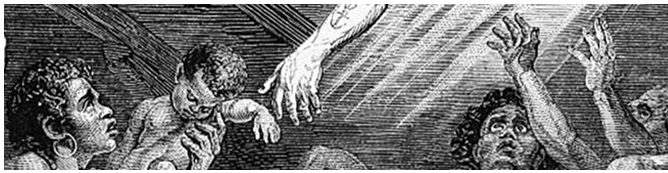

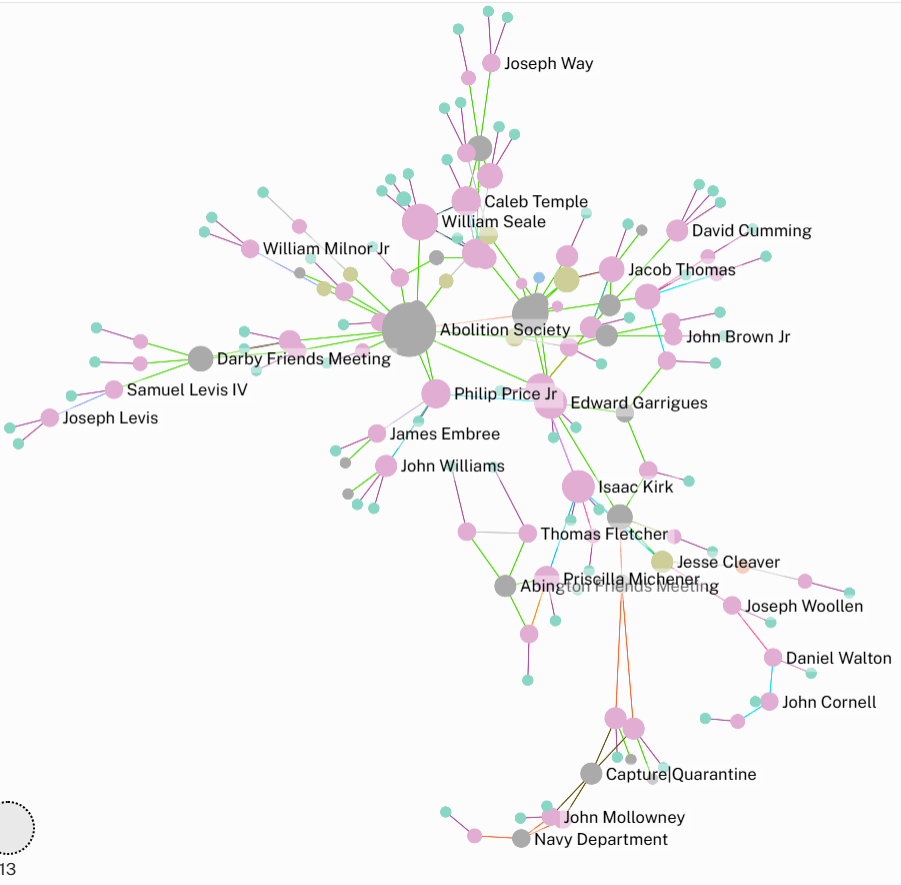
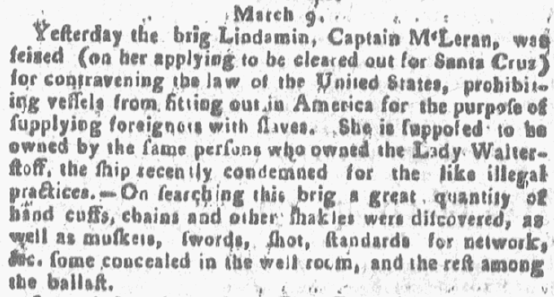
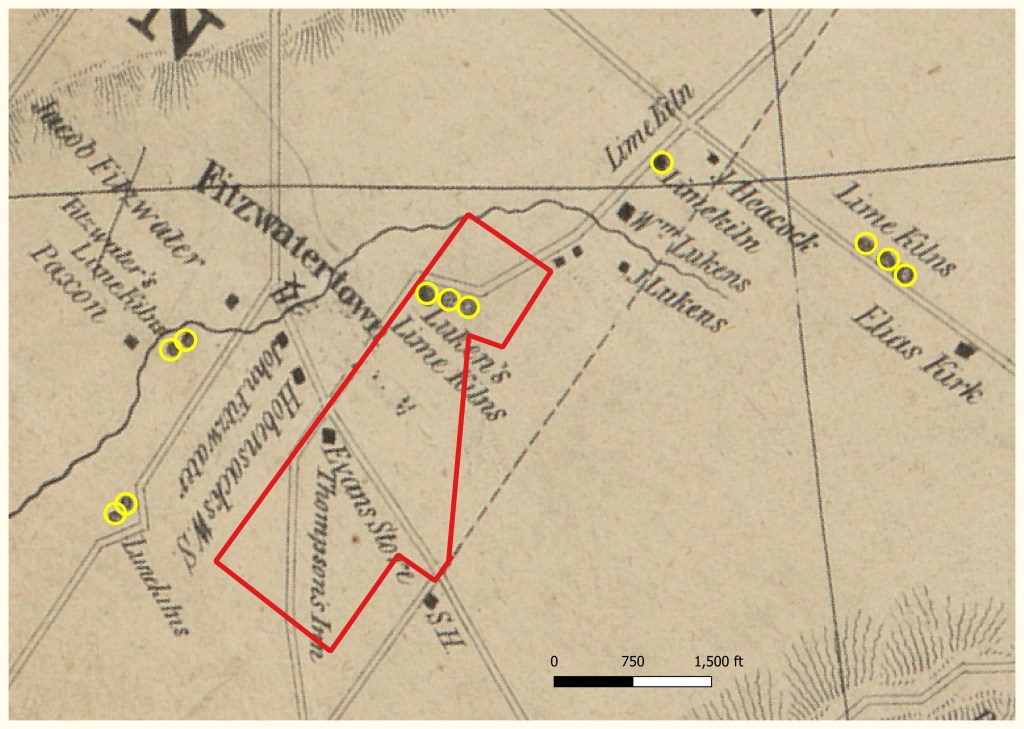

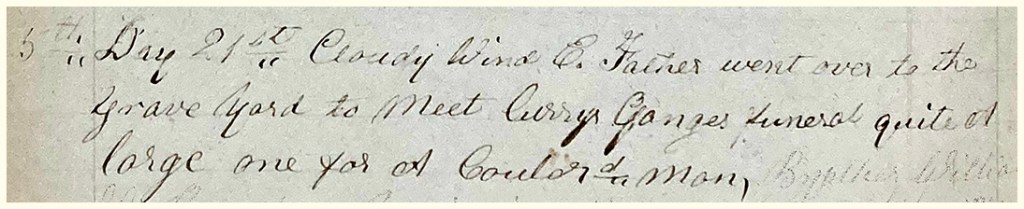
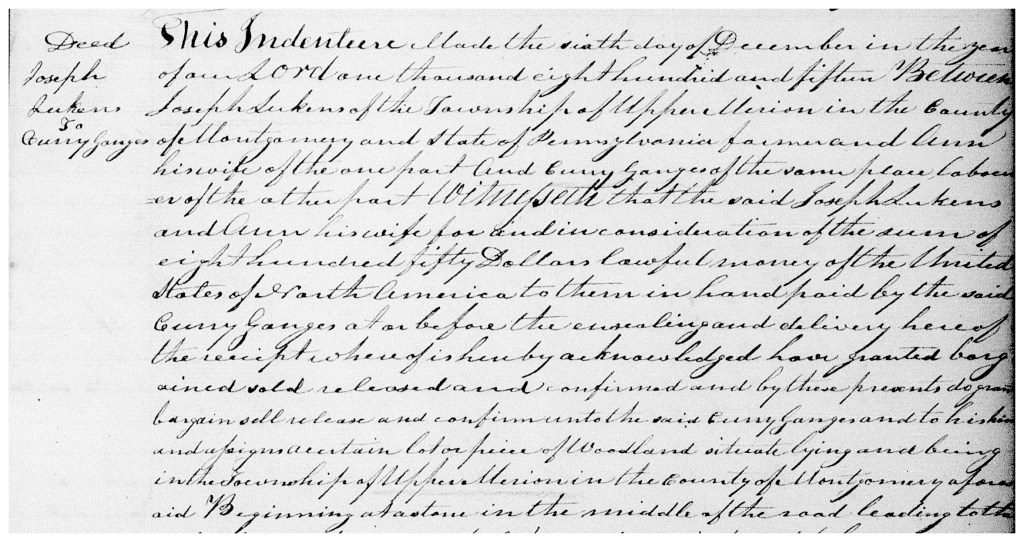
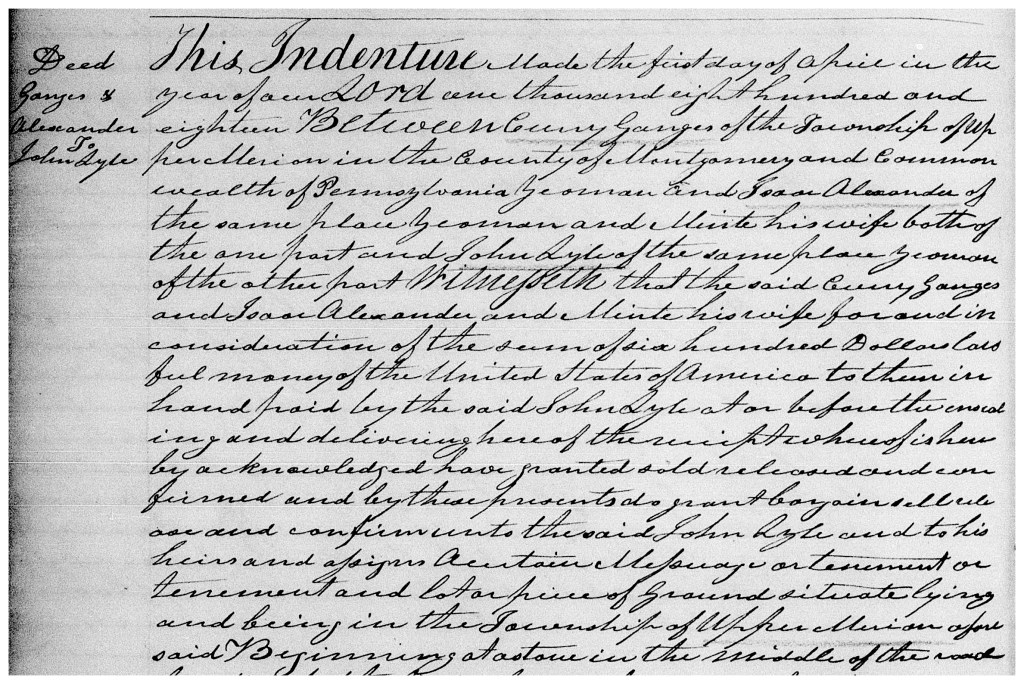
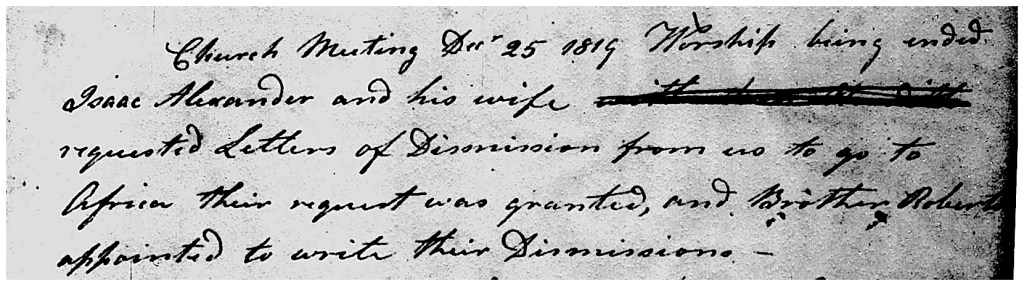
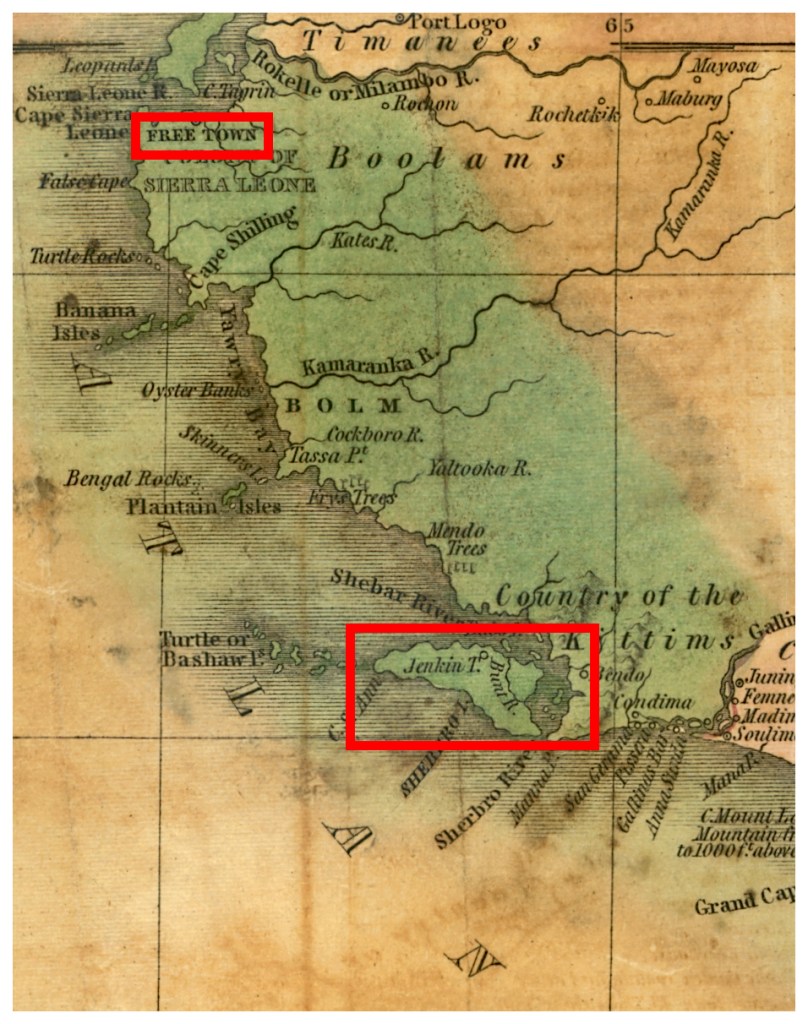
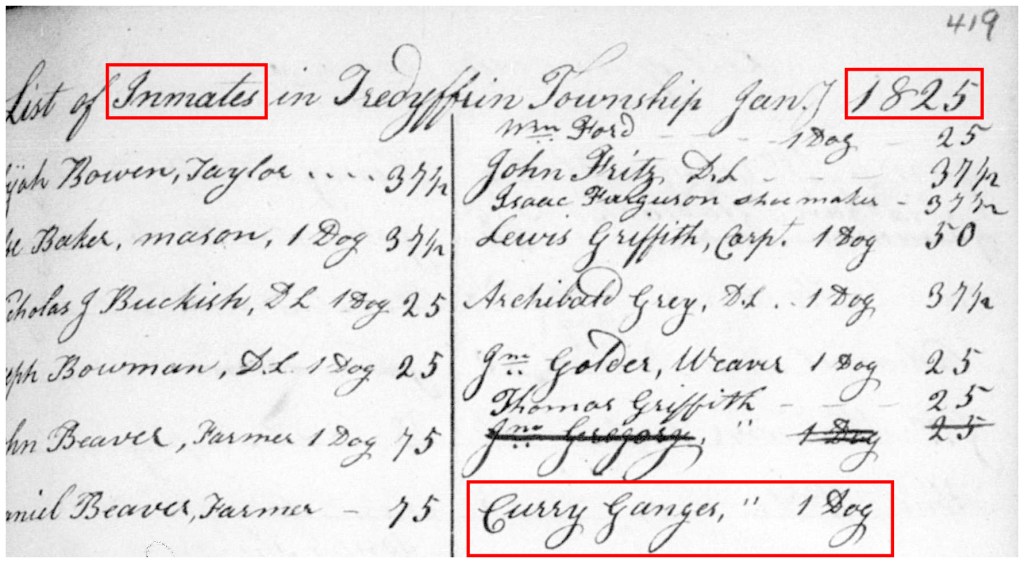
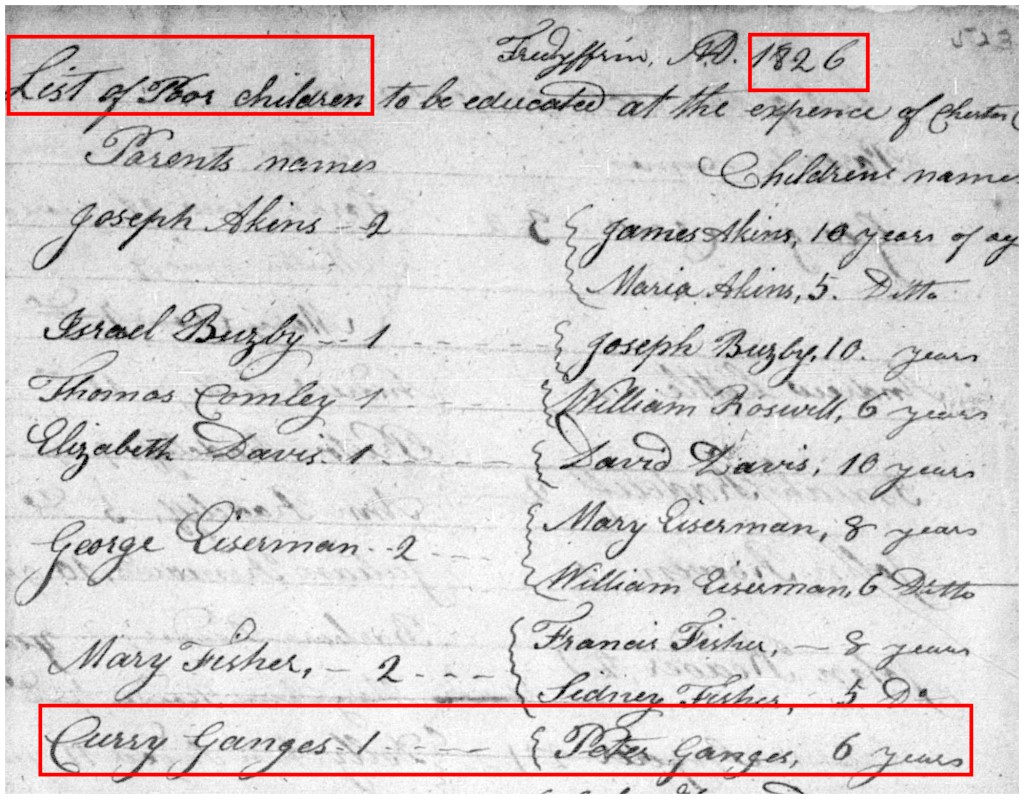
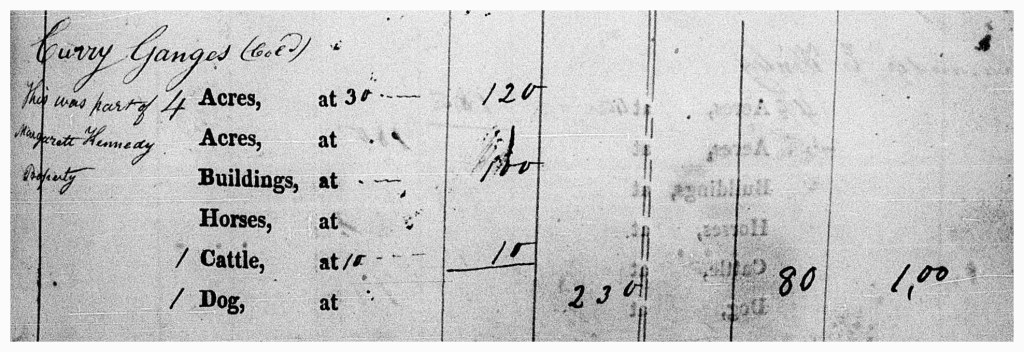

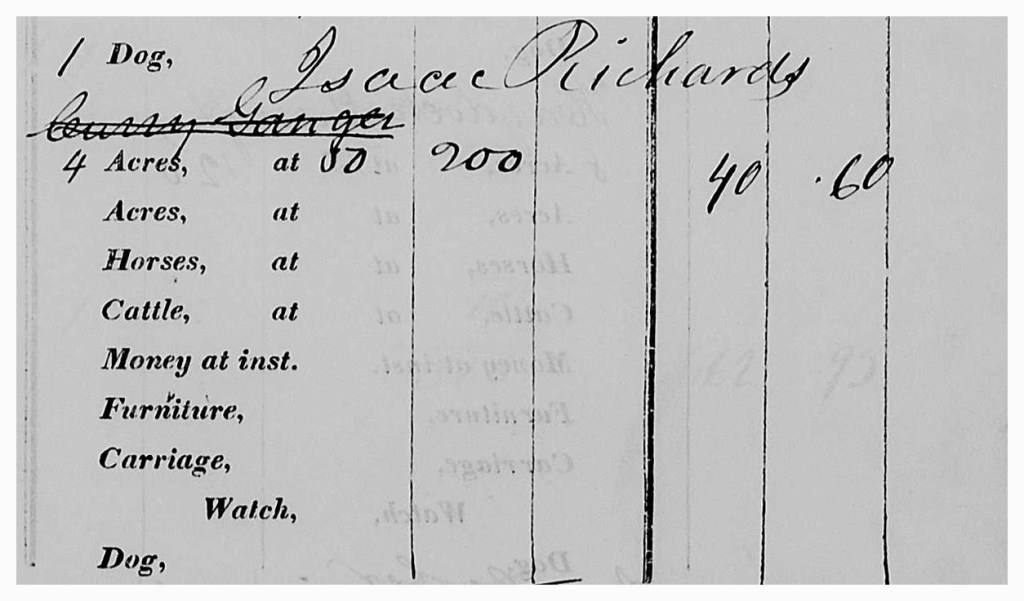


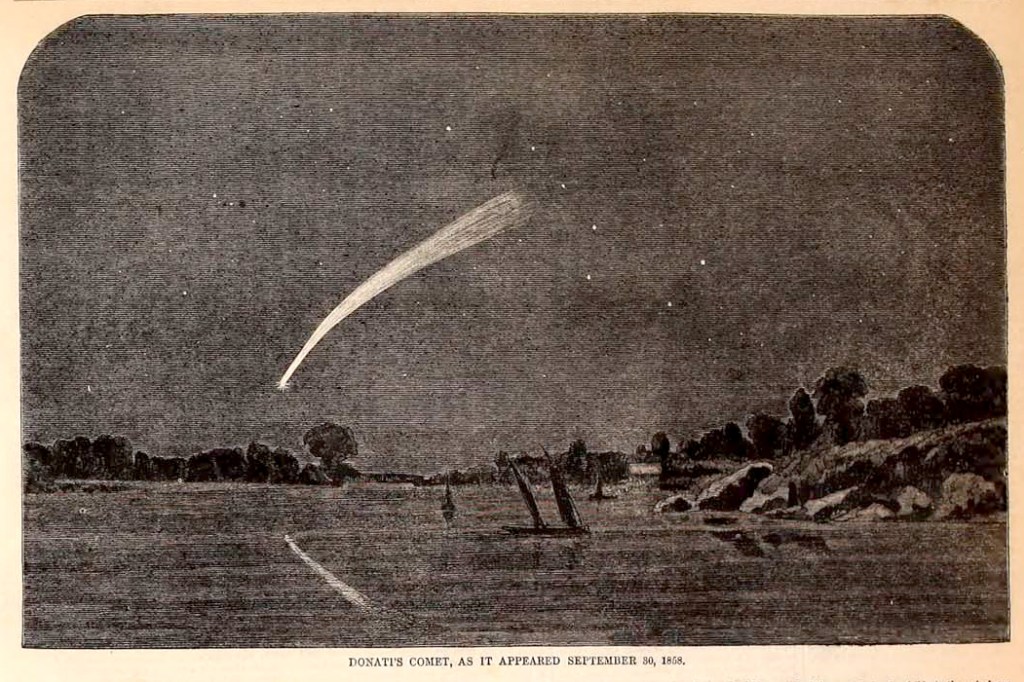
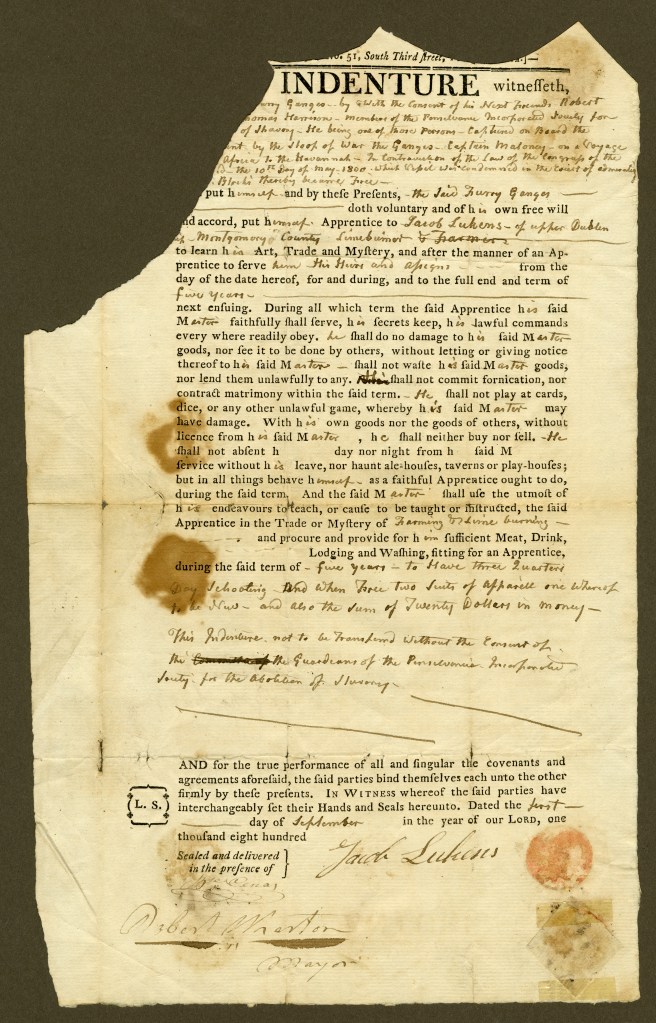

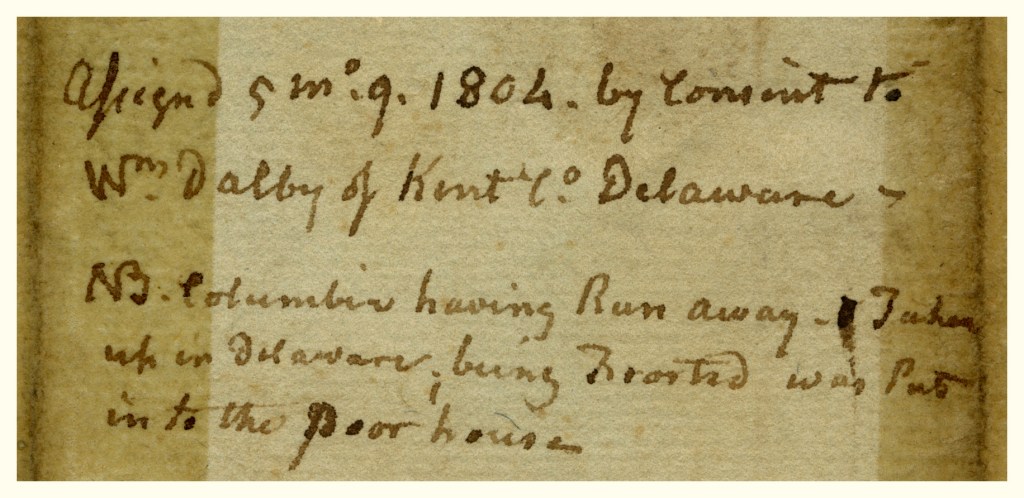
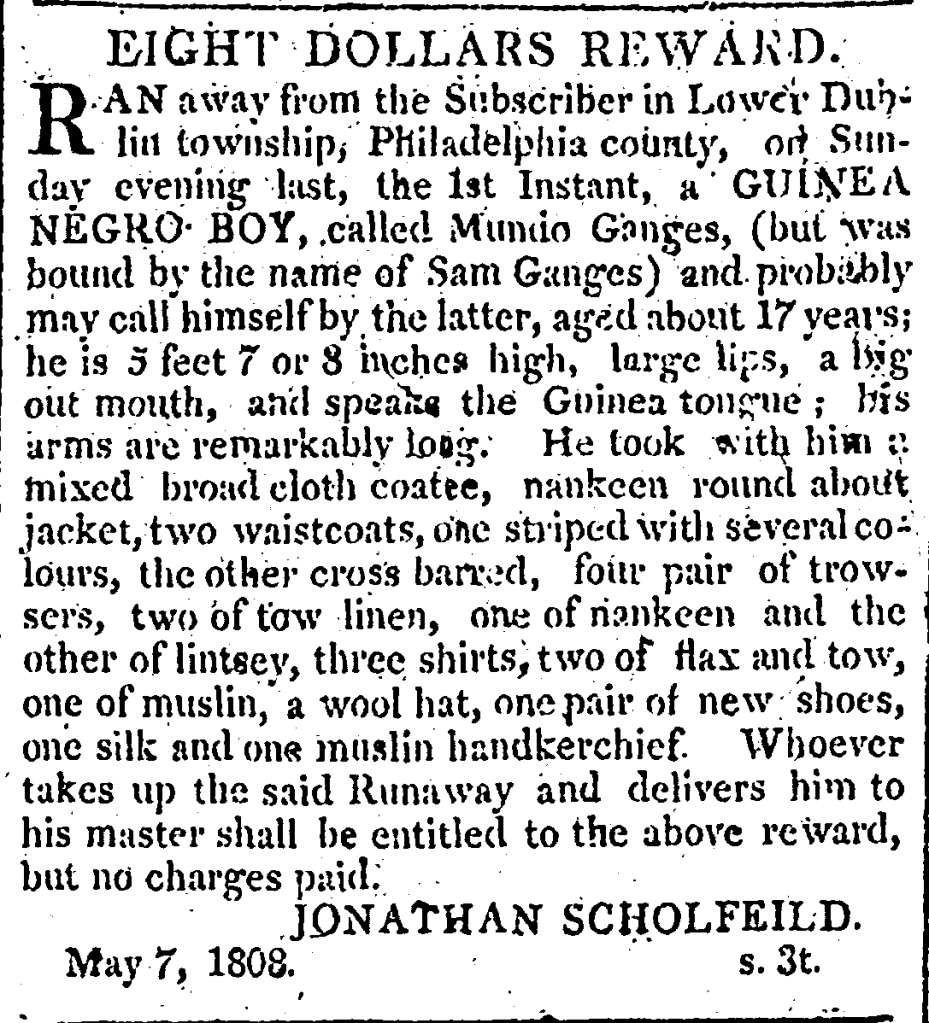


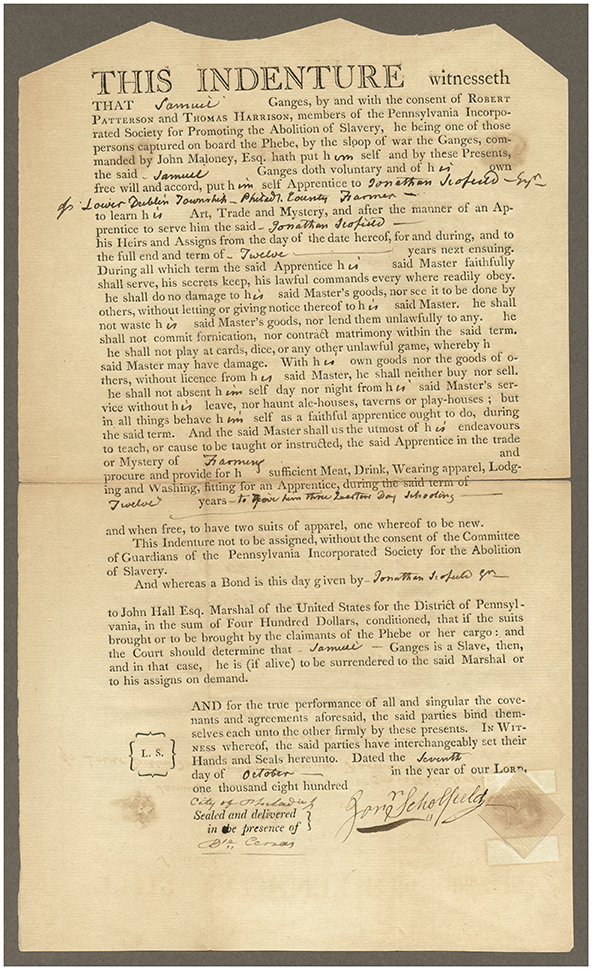
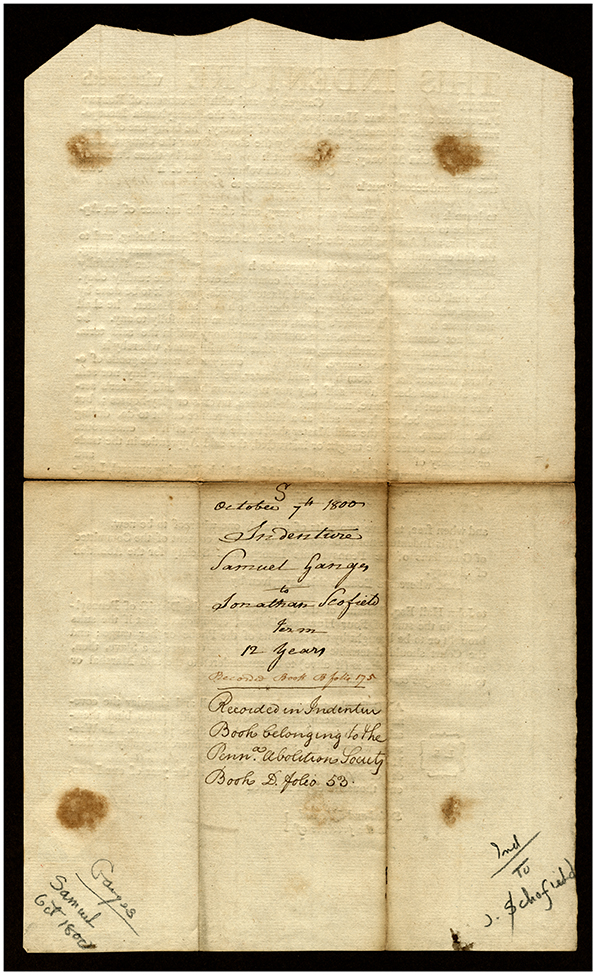
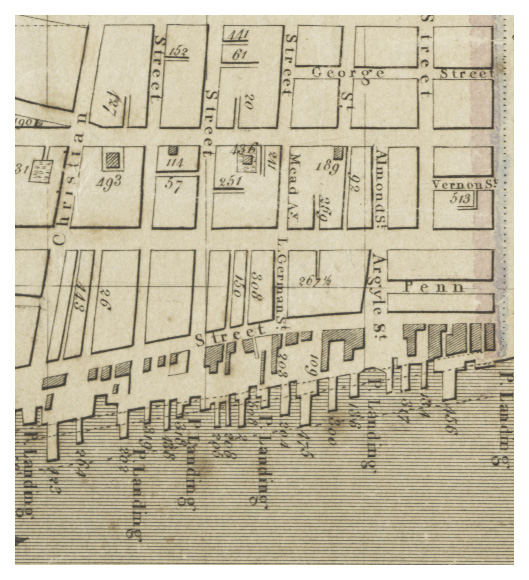

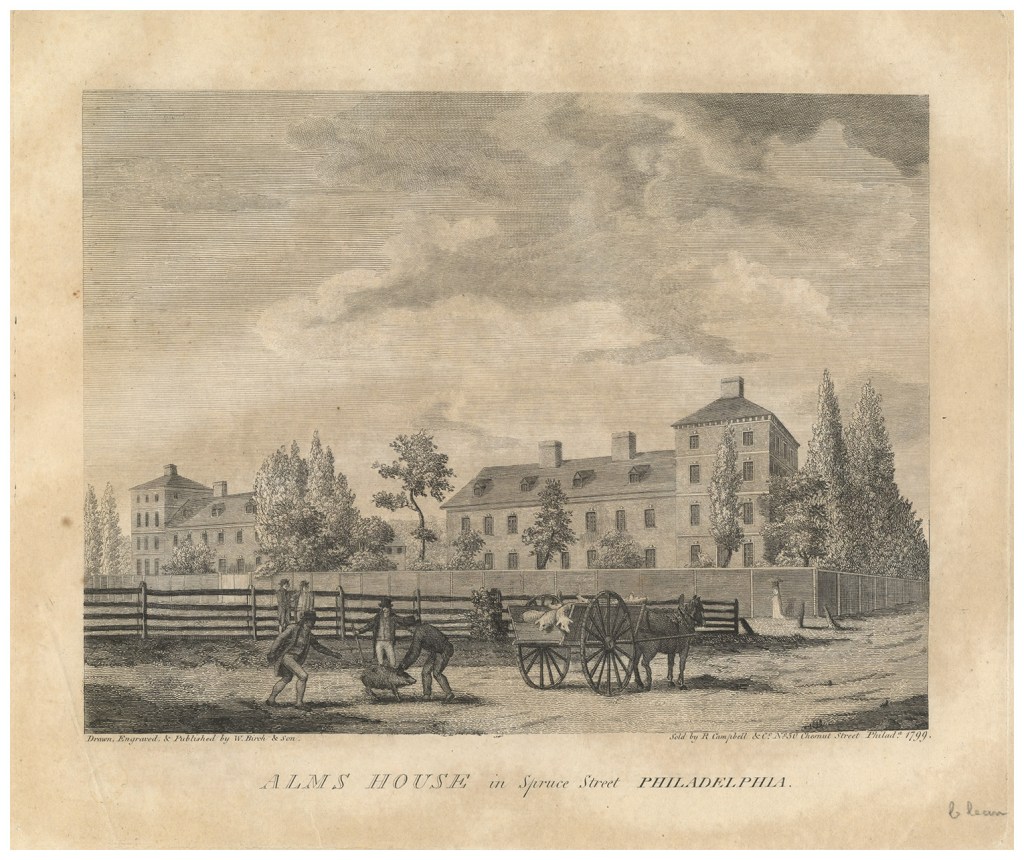
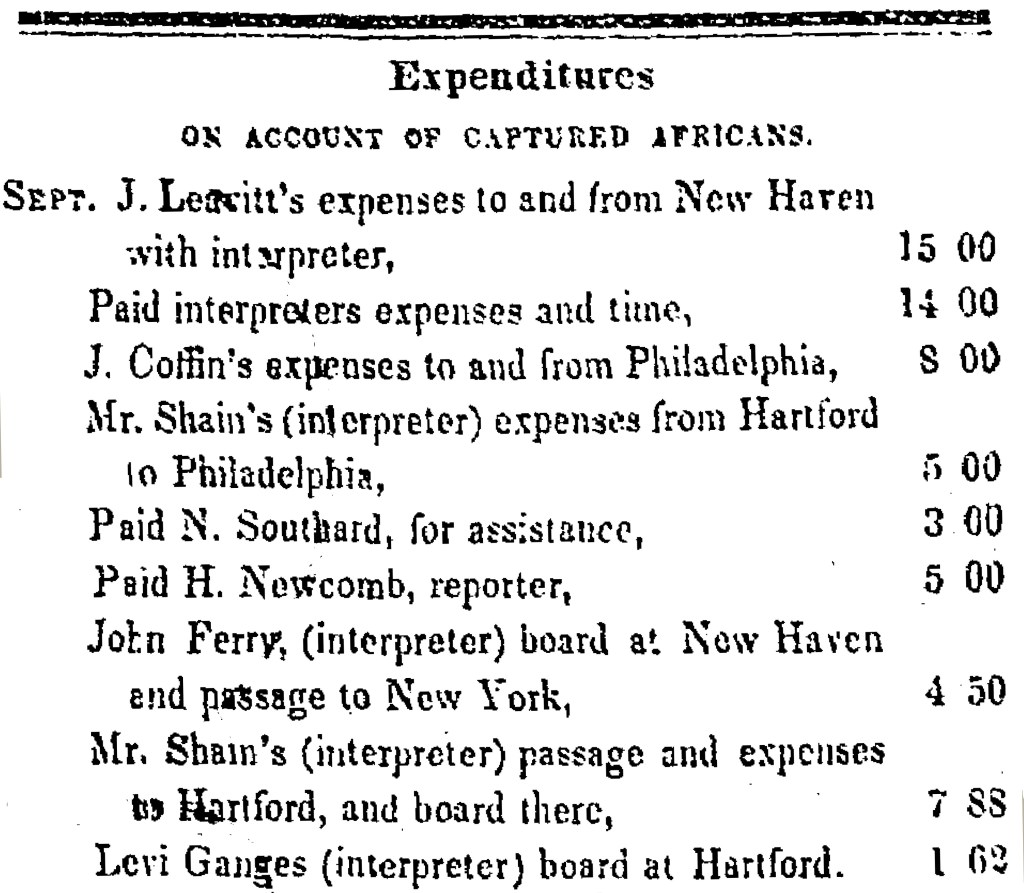
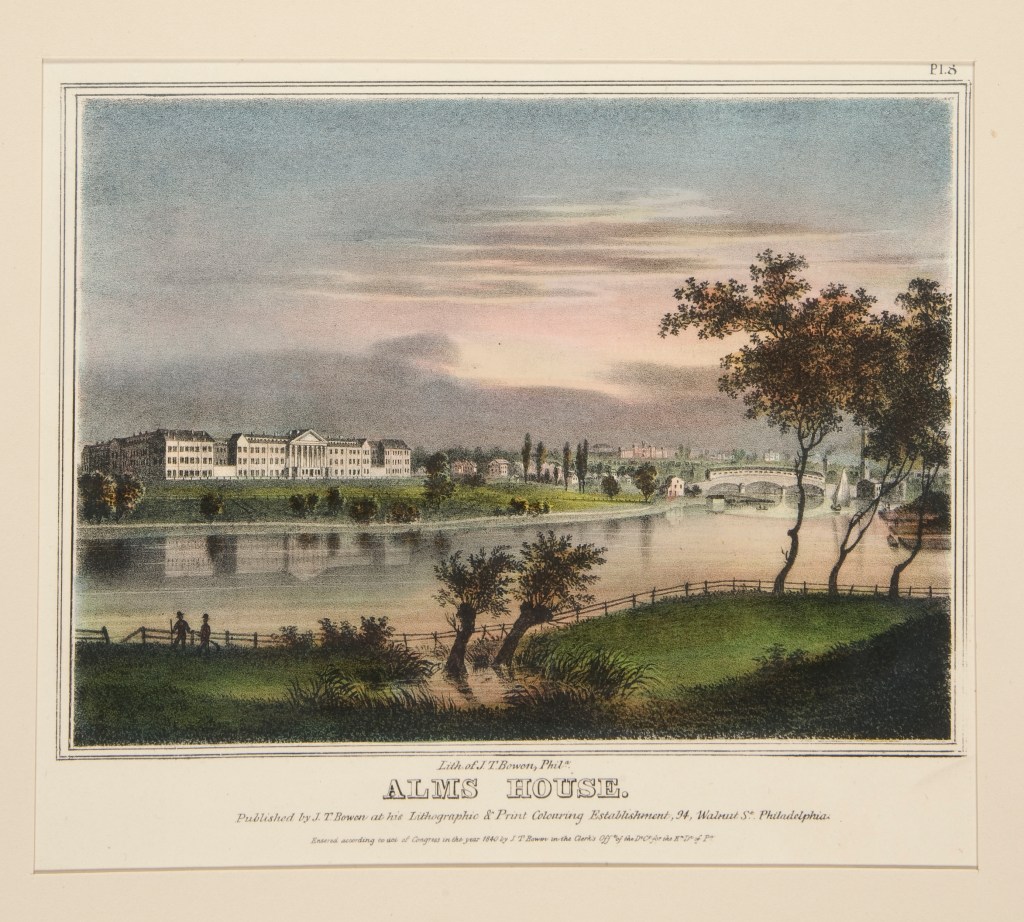
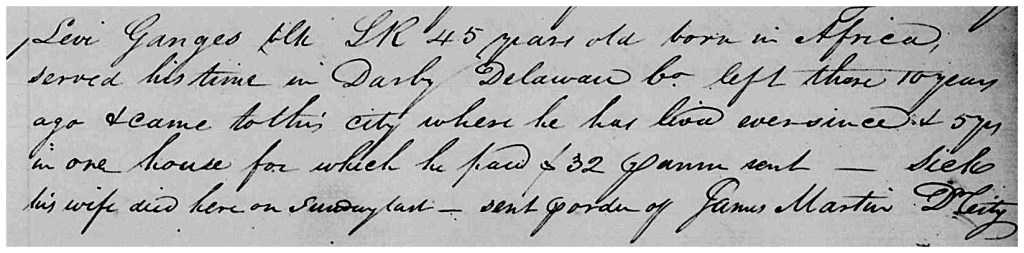
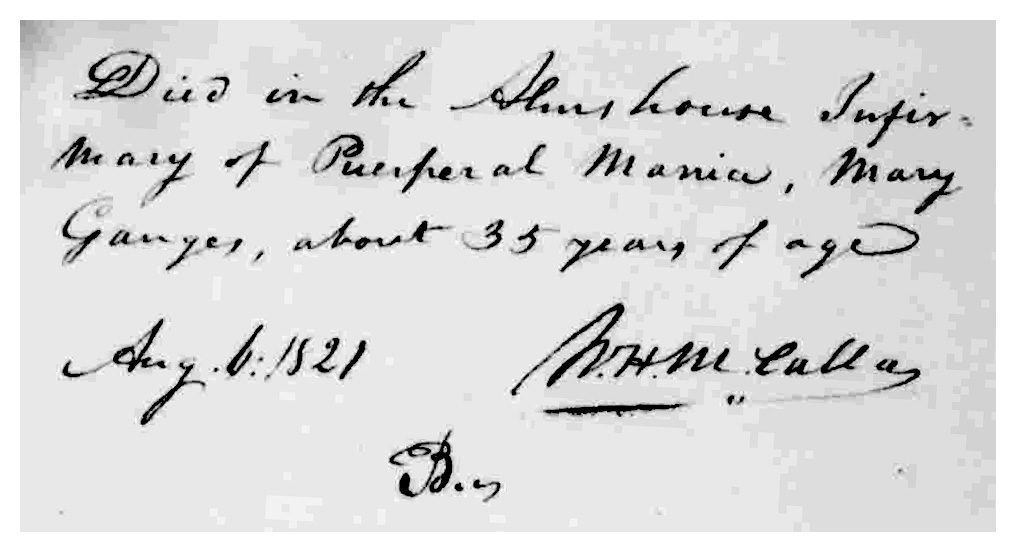
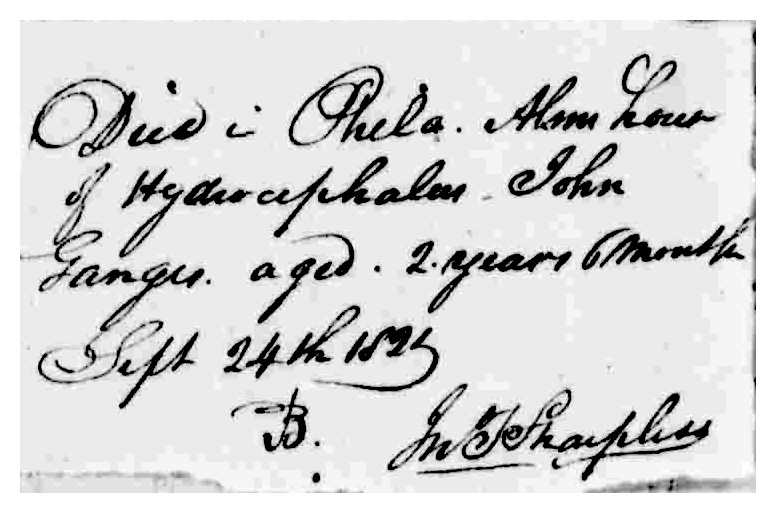
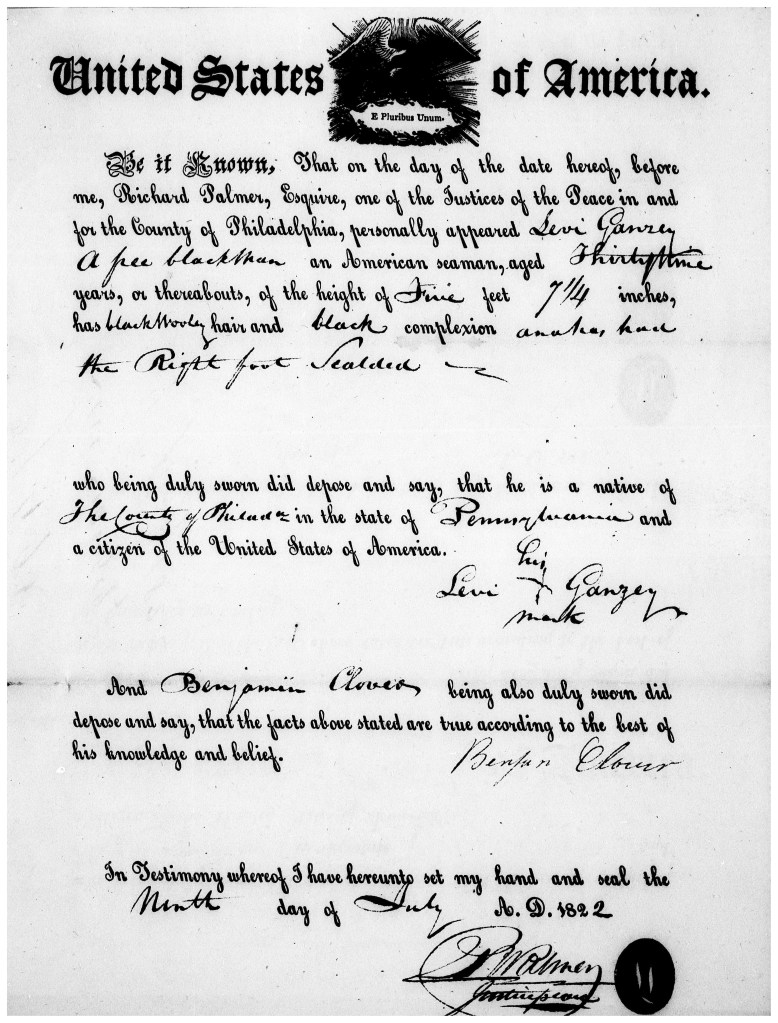

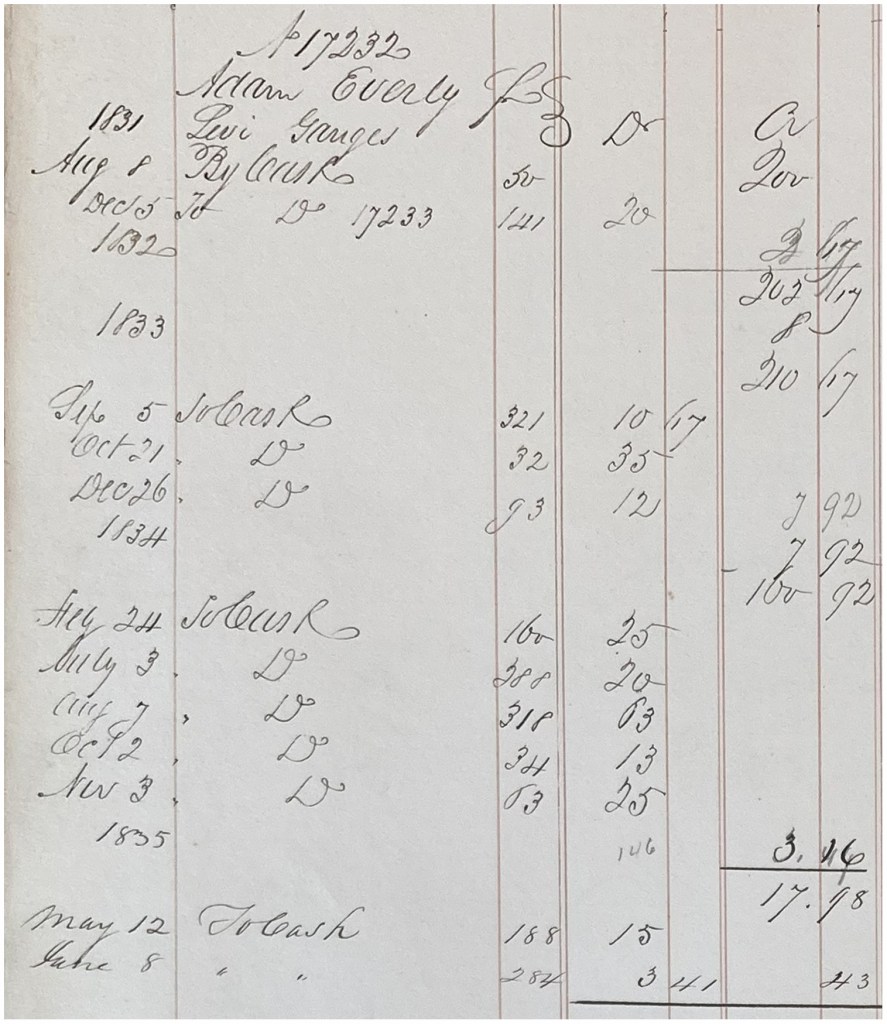
 The Ganges Families History Project